Card News

NEWS
KOTI - Korea Transport institute
Feeds and Updates
“I’m Trying to Get to Chungmuro… Which Direction Should I Take?” - Why Is Navigating the Subway Still So Difficult? –
June 30 2026
-
“I’m Trying to Get to Chungmuro… Which Direction Should I Take?”
- Why Is Navigating the Subway Still So Difficult? –
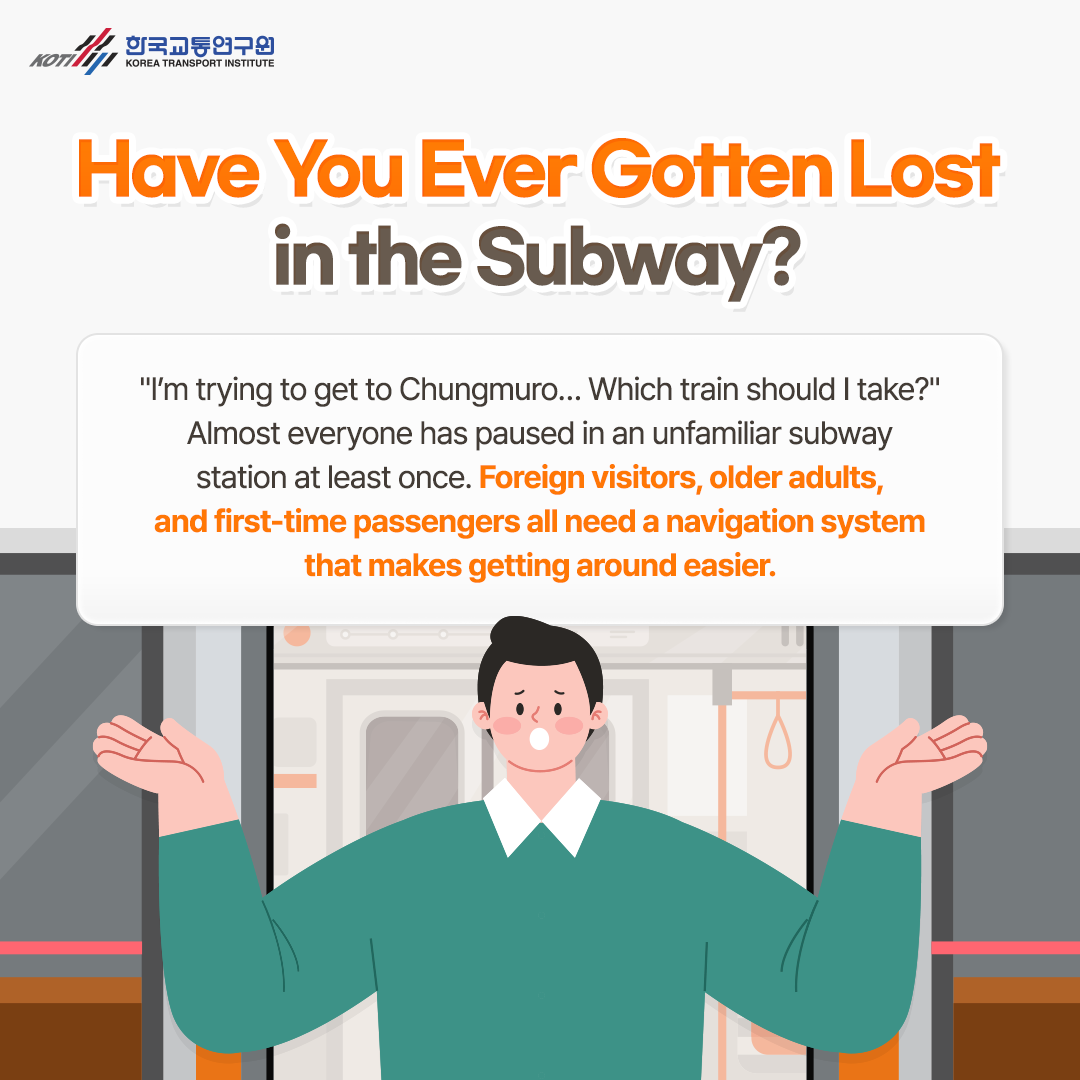
Have You Ever Gotten Lost in the Subway?
"I’m trying to get to Chungmuro… Which train should I take?"
Almost everyone has paused in an unfamiliar subway station at least once.
Foreign visitors, older adults, and first-time passengers all need a navigation system that makes getting around easier.
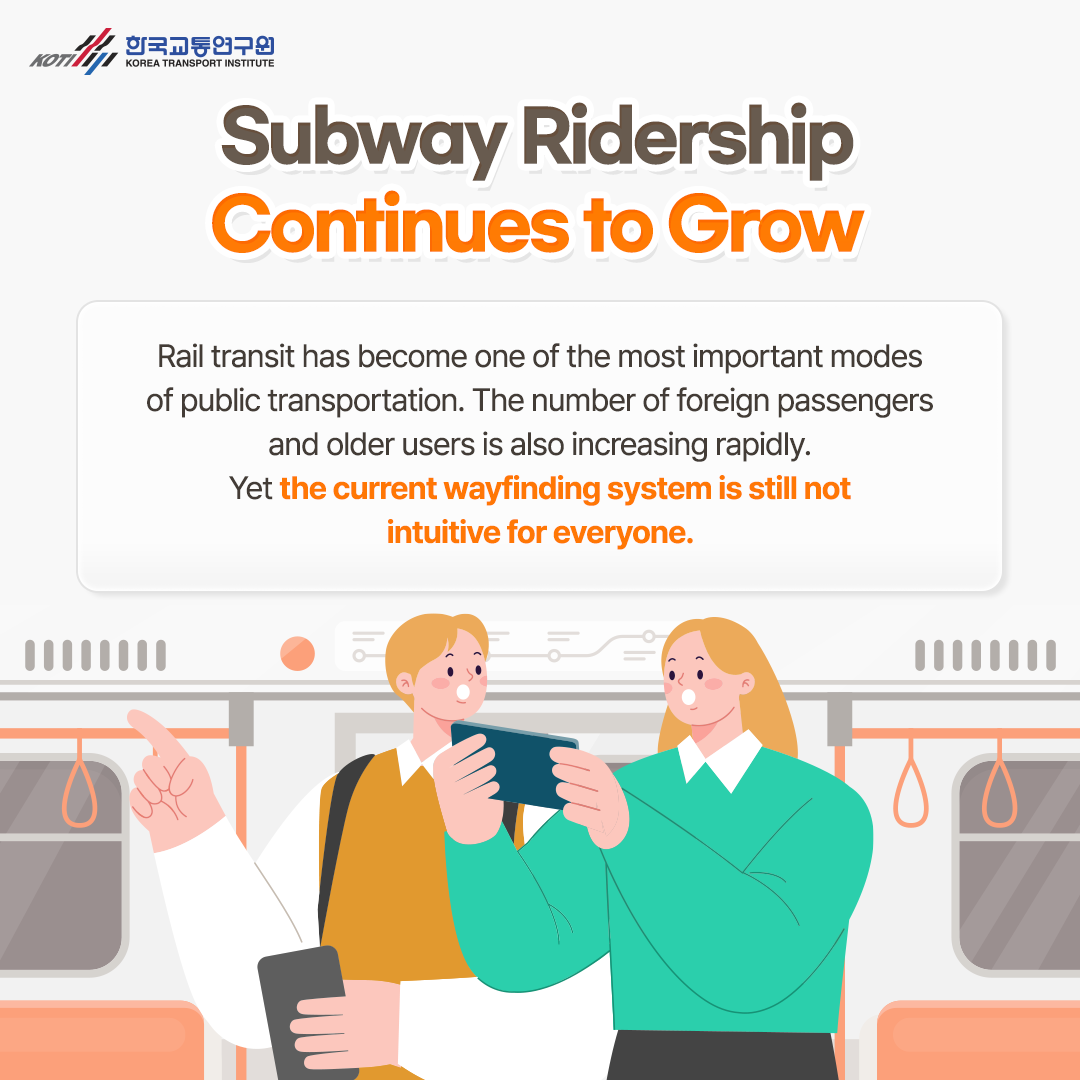
Subway Ridership Continues to Grow
Rail transit has become one of the most important modes of public transportation.
The number of foreign passengers and older users is also increasing rapidly.
Yet the current wayfinding system is still not intuitive for everyone.
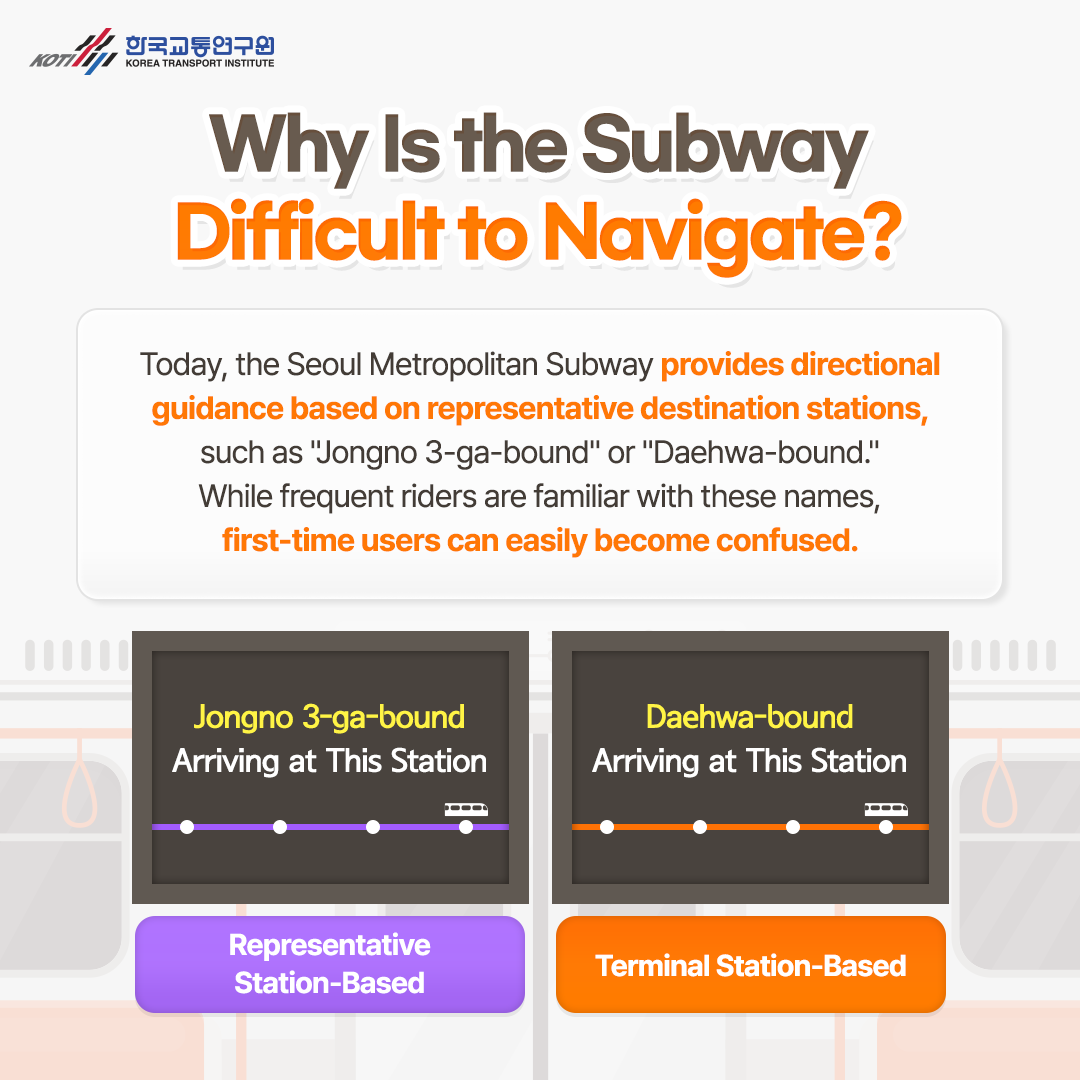
Why Is the Subway Difficult to Navigate?
Today, the Seoul Metropolitan Subway provides directional guidance based on representative destination stations, such as "Jongno 3-ga-bound" or "Daehwa-bound."
While frequent riders are familiar with these names, first-time users can easily become confused.
< Jongno 3-ga-bound / Arriving at This Station / Representative Station-Based / Daehwa-bound / Terminal Station-Based>
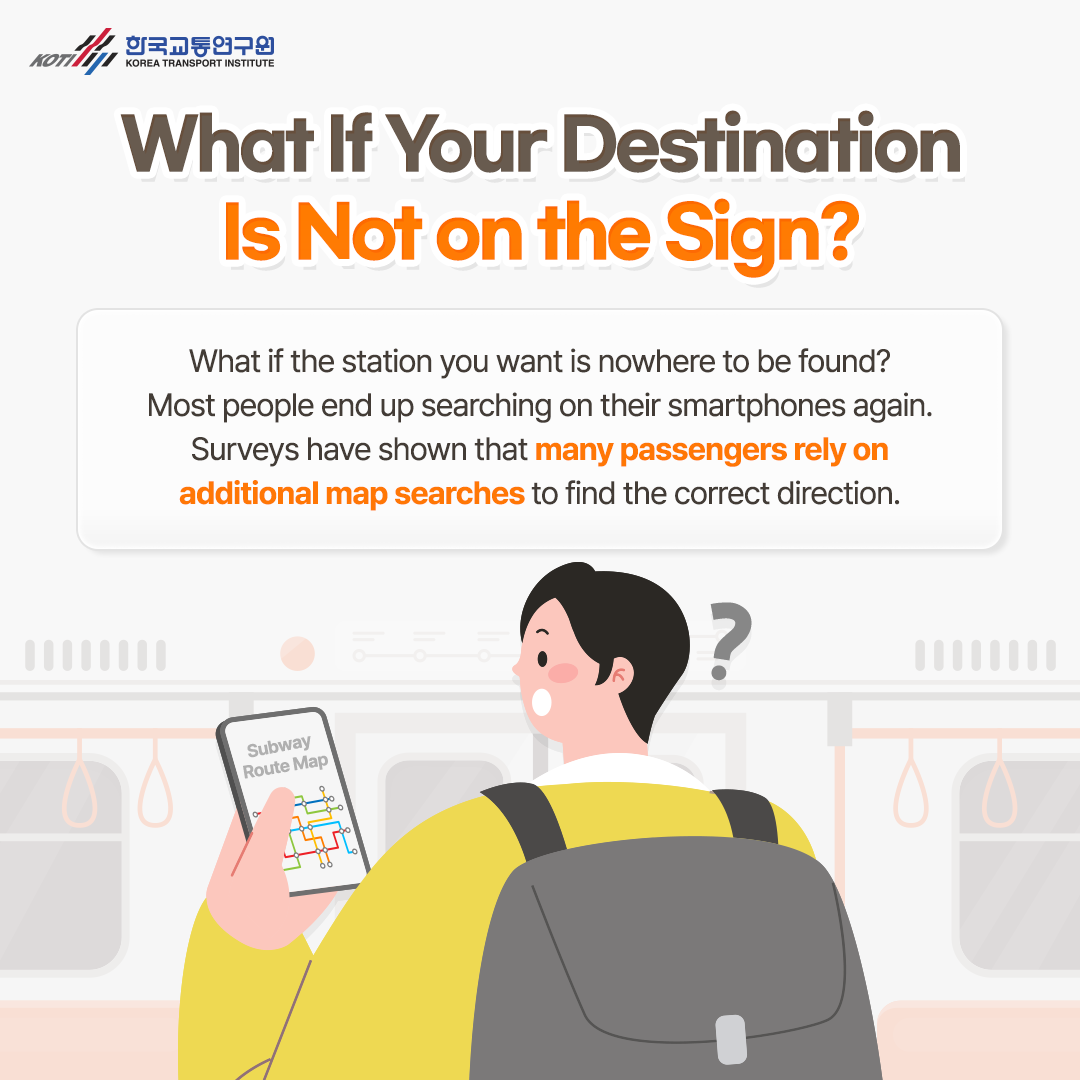
What If Your Destination Is Not on the Sign?
What if the station you want is nowhere to be found?
Most people end up searching on their smartphones again.
Surveys have shown that many passengers rely on additional map searches to find the correct direction.
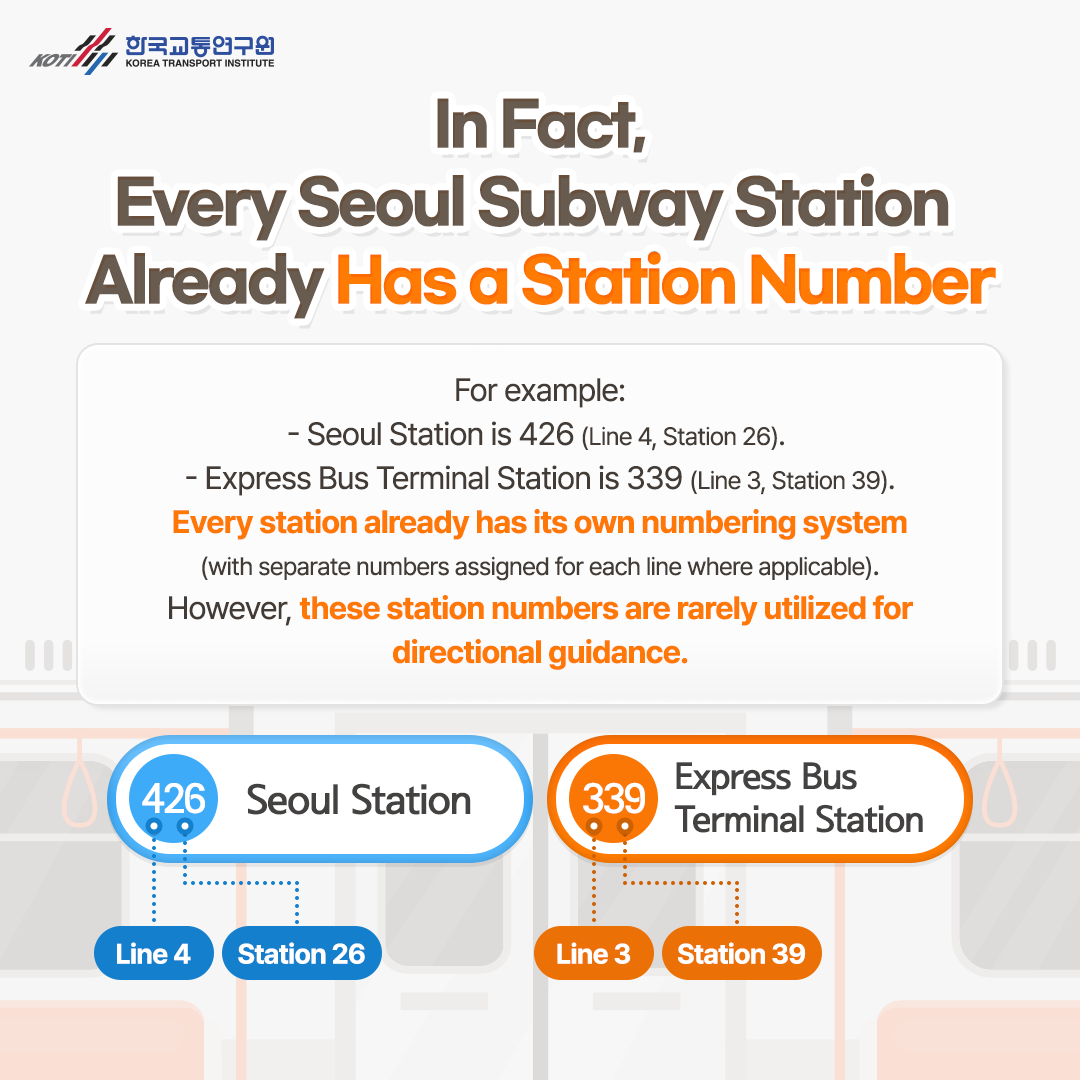
In Fact, Every Seoul Subway Station Already Has a Station Number
For example:- Seoul Station is 426 (Line 4, Station 26).
- Express Bus Terminal Station is 339 (Line 3, Station 39).
Every station already has its own numbering system (with separate numbers assigned for each line where applicable).
However, these station numbers are rarely utilized for directional guidance.
< Seoul Station / Line 4 / Station 26 / Express Bus Terminal Station / Line 3 / Station 39 >
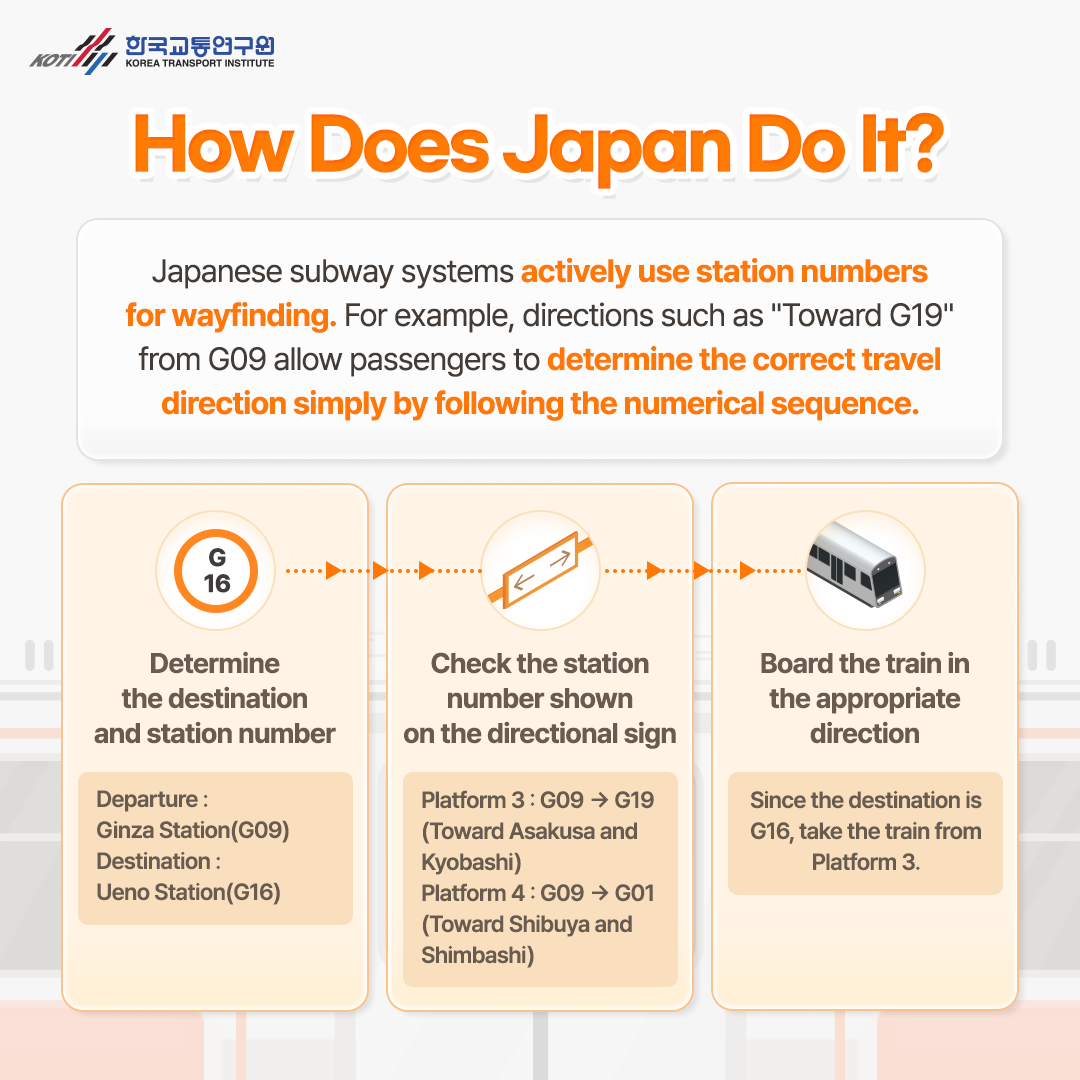
How Does Japan Do It?
Japanese subway systems actively use station numbers for wayfinding.
For example, directions such as "Toward G19" from G09 allow passengers to determine the correct travel direction simply by following the numerical sequence.
< Determine the destination and station number → Departure: Ginza Station → Destination: Ueno Station → Check the station number shown on the directional sign → Platform 3: Toward Asakusa and Kyobashi → Platform 4: Toward Shibuya and Shimbashi → Board the train in the appropriate direction → Since the destination is G16, take the train from Platform 3.>
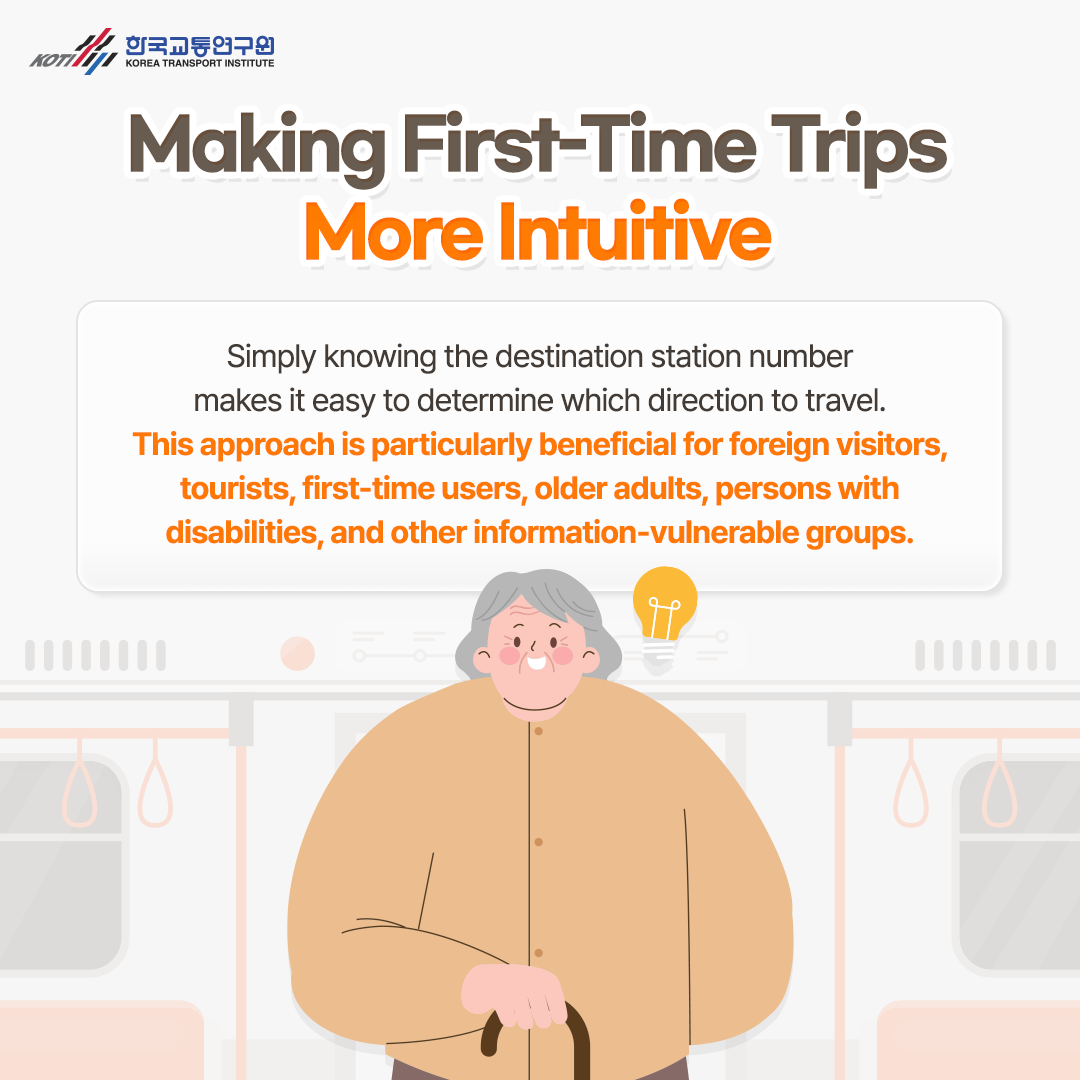
Making First-Time Trips More Intuitive
Simply knowing the destination station number makes it easy to determine which direction to travel.
This approach is particularly beneficial for foreign visitors, tourists, first-time users, older adults, persons with disabilities, and other information-vulnerable groups.
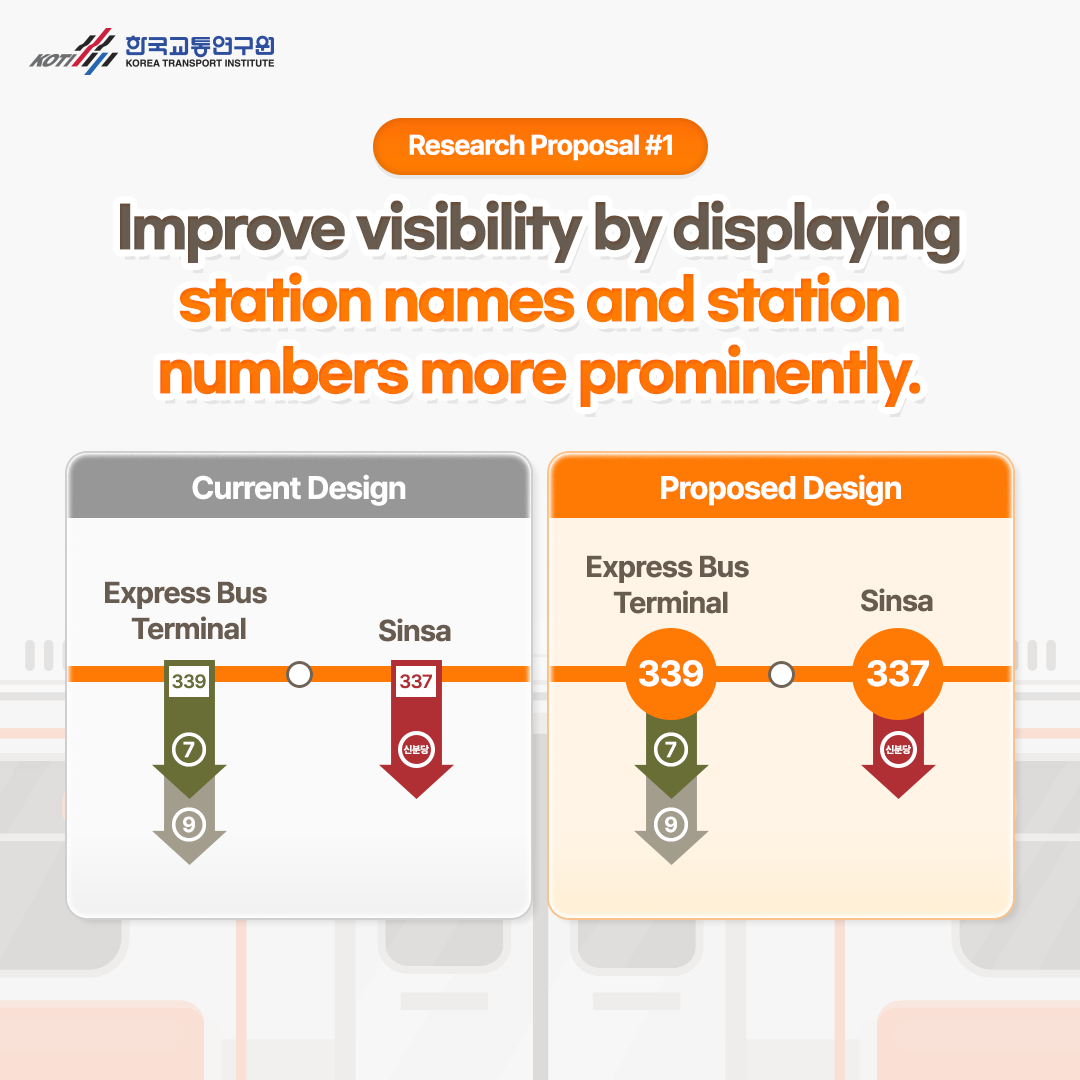
Research Proposal #1
Improve visibility by displaying station names and station numbers more prominently.
< Current Design / Proposed Design / Express Bus Terminal / Sinsa>
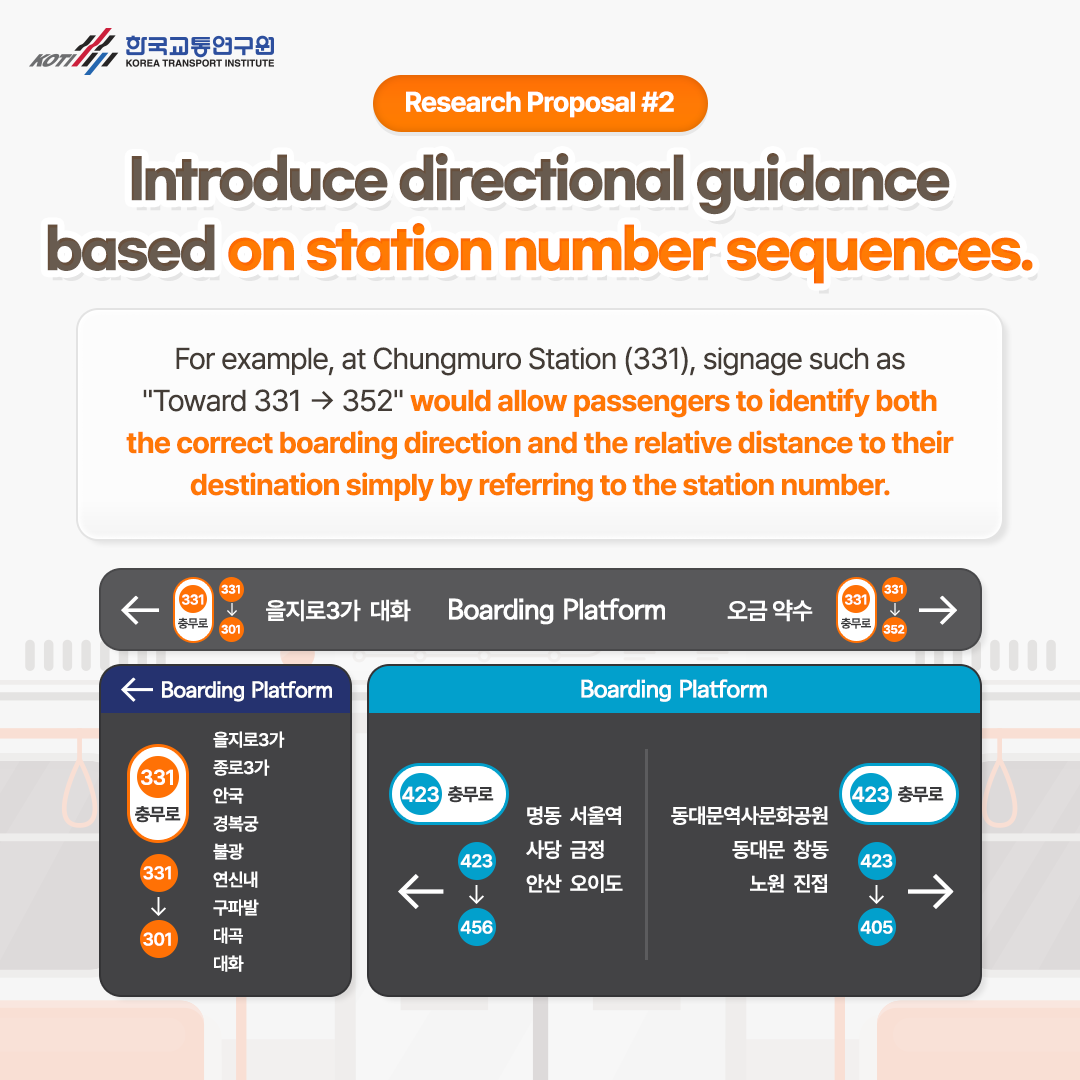
Research Proposal #2
Introduce directional guidance based on station number sequences.
For example, at Chungmuro Station (331), signage such as "Toward 331 → 352" would allow passengers to identify both the correct boarding direction and the relative distance to their destination simply by referring to the station number..
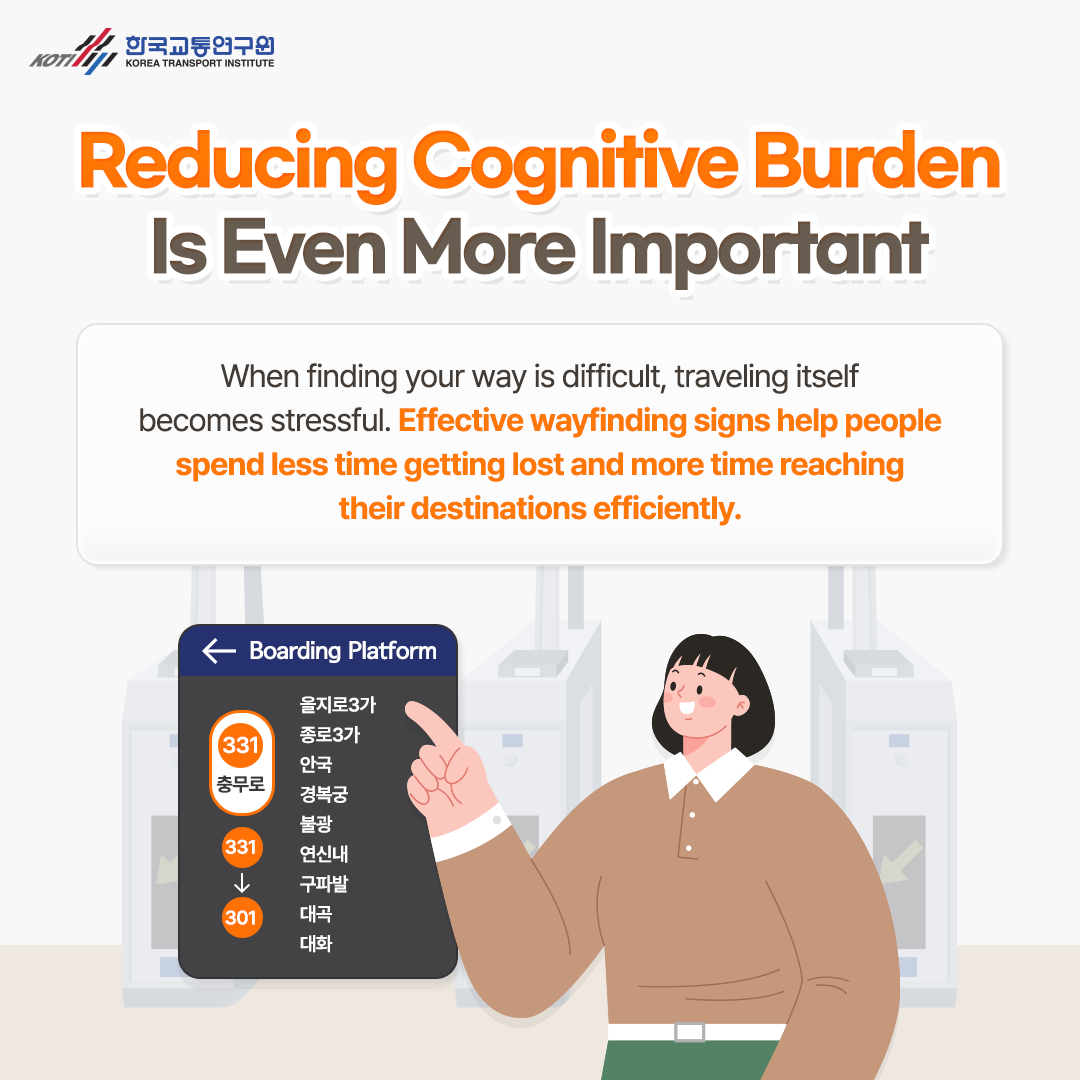
Reducing Cognitive Burden Is Even More Important
When finding your way is difficult, traveling itself becomes stressful.
Effective wayfinding signs help people spend less time getting lost and more time reaching their destinations efficiently.
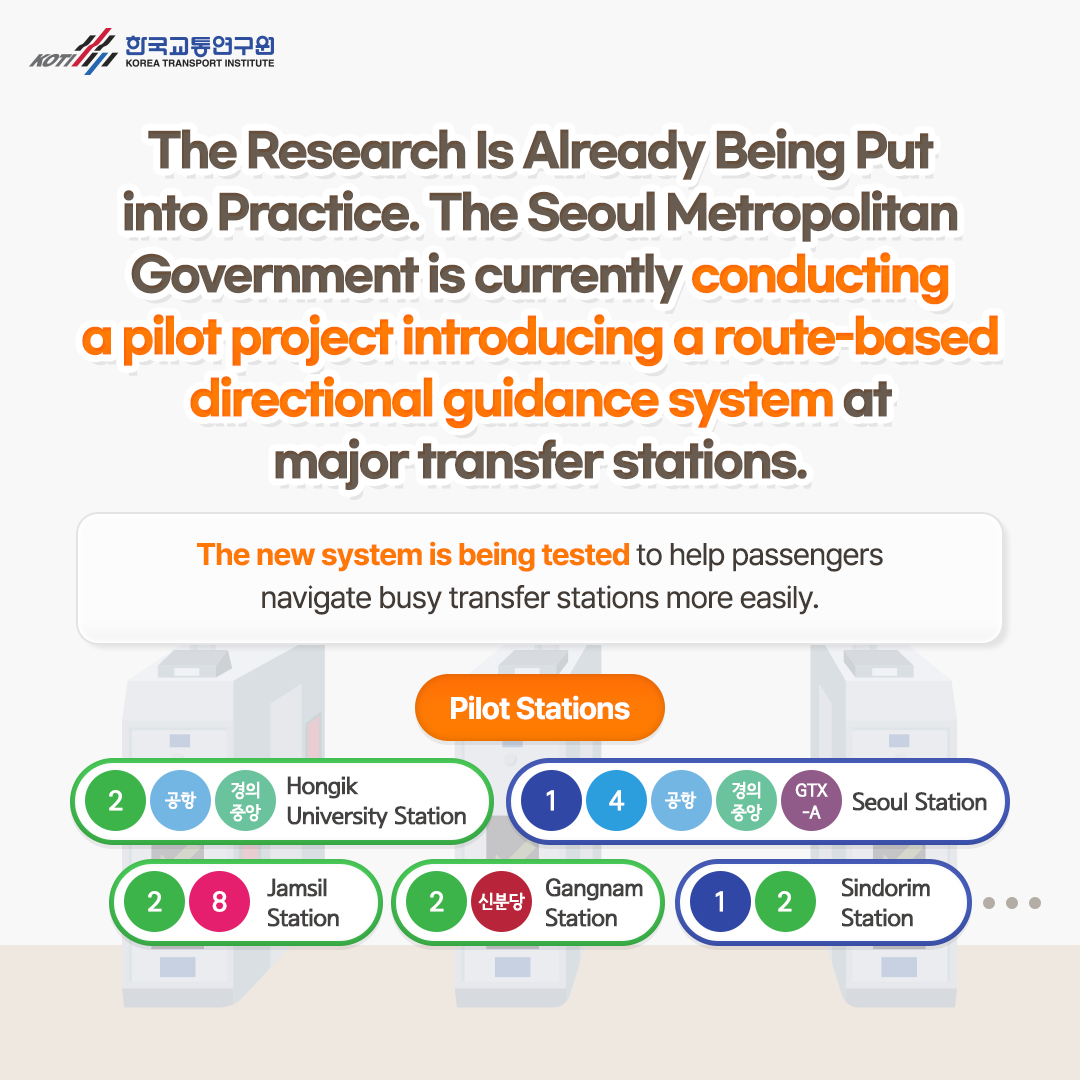
The Research Is Already Being Put into Practice
The Seoul Metropolitan Government is currently conducting a pilot project introducing a route-based directional guidance system at major transfer stations.
The new system is being tested to help passengers navigate busy transfer stations more easily.
Toward a Subway System Where No One Gets Lost
A subway should not be convenient only for those who use it every day. It should also be easy to navigate for first-time visitors.
The Korea Transport Institute continues to research more intuitive and inclusive transportation environments.
* This card news content is based on the research report, “Assessment of the Current Status of Subway Wayfinding Signs and Improvement Measures,” conducted as part of the institutional research program of the Korea Transport Institute, and has been partially revised and supplemented.