Card News

NEWS
KOTI - Korea Transport institute
Feeds and Updates
“It Takes 10 Minutes Just to Find an Elevator” Are Our Transfers Convenient for Everyone?
May 31 2026
-
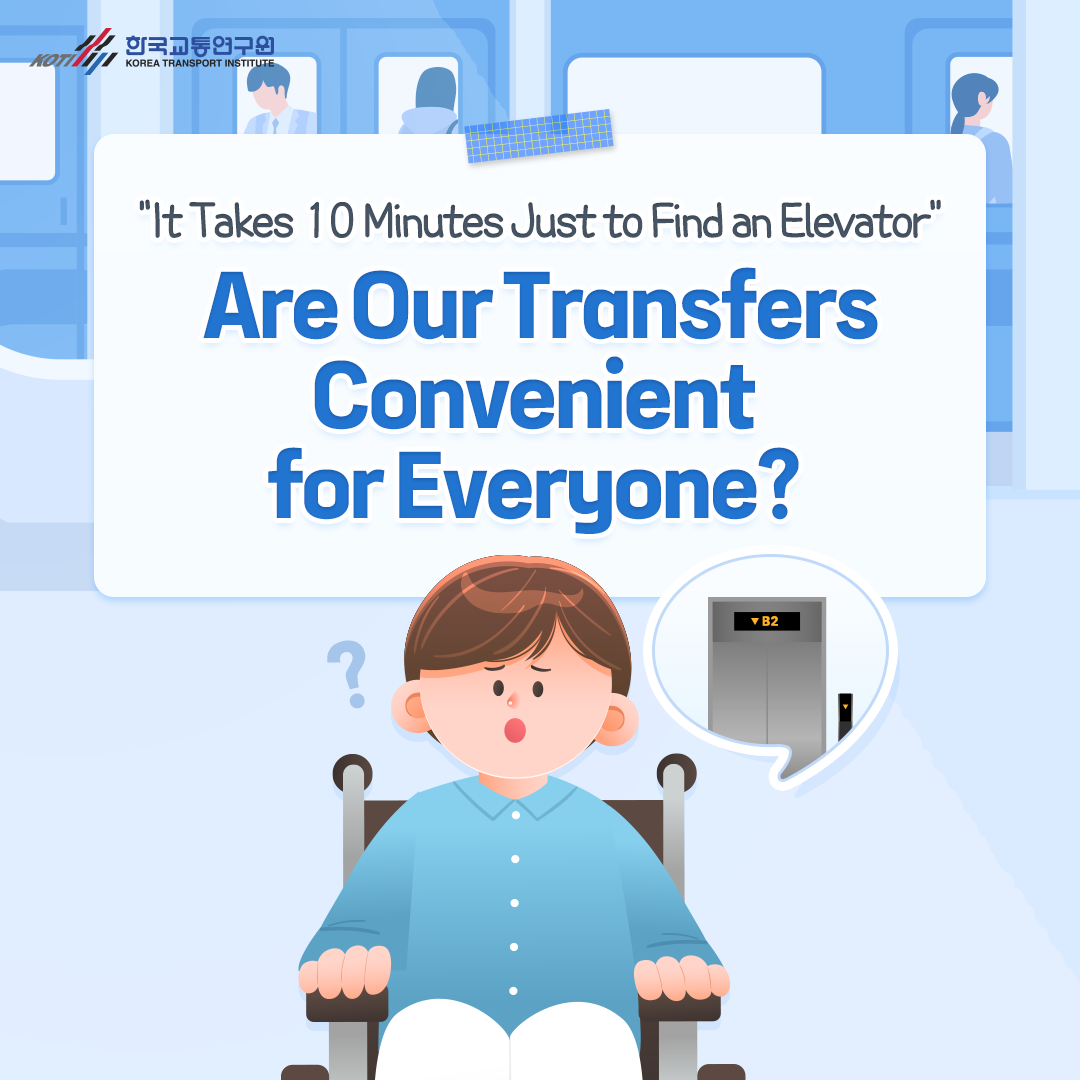
“It Takes 10 Minutes Just to Find an Elevator”
Are Our Transfers Convenient for Everyone?
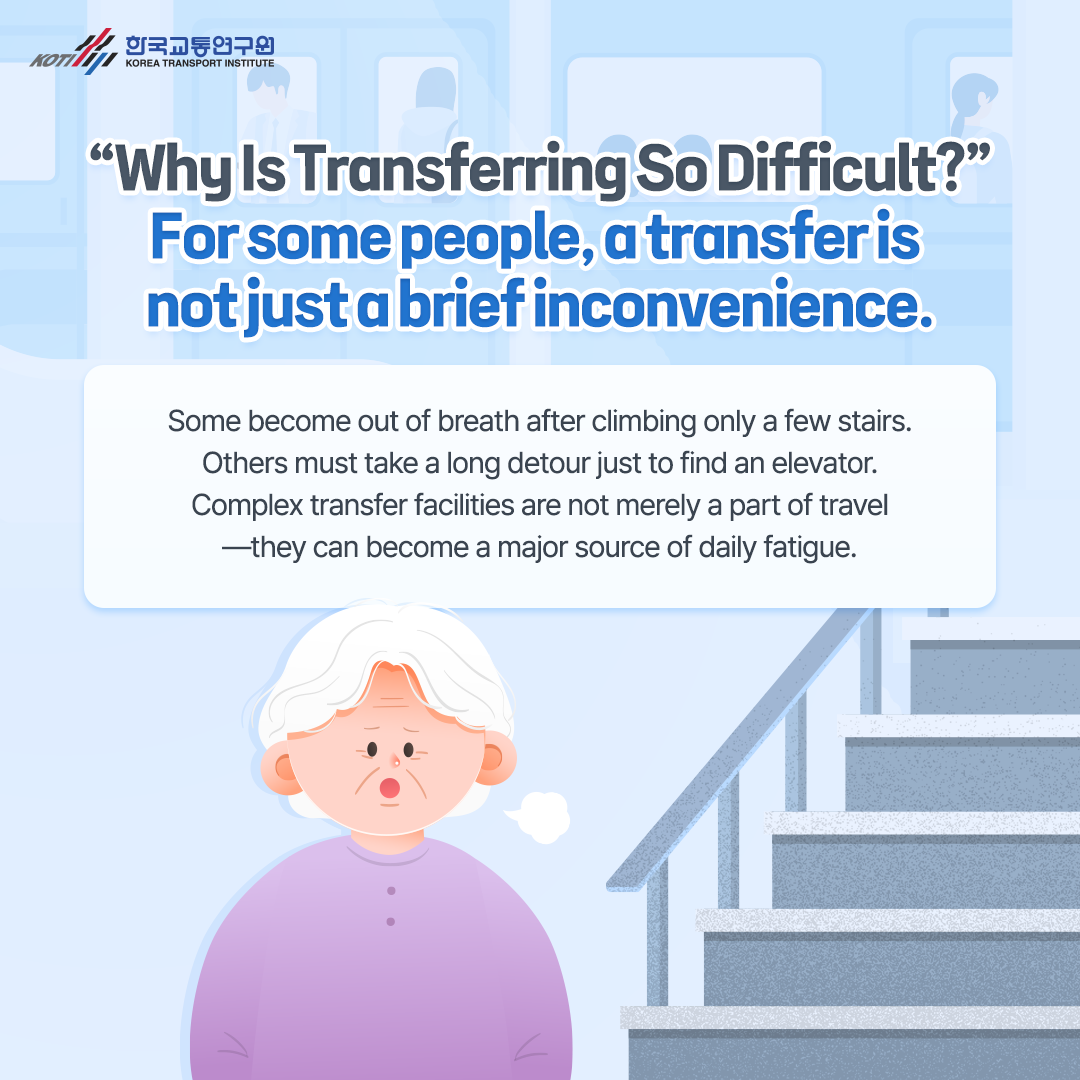
“Why Is Transferring So Difficult?”
For some people, a transfer is not just a brief inconvenience.
Some become out of breath after climbing only a few stairs.
Others must take a long detour just to find an elevator.
Complex transfer facilities are not merely a part of travel—they can become a major source of daily fatigue.
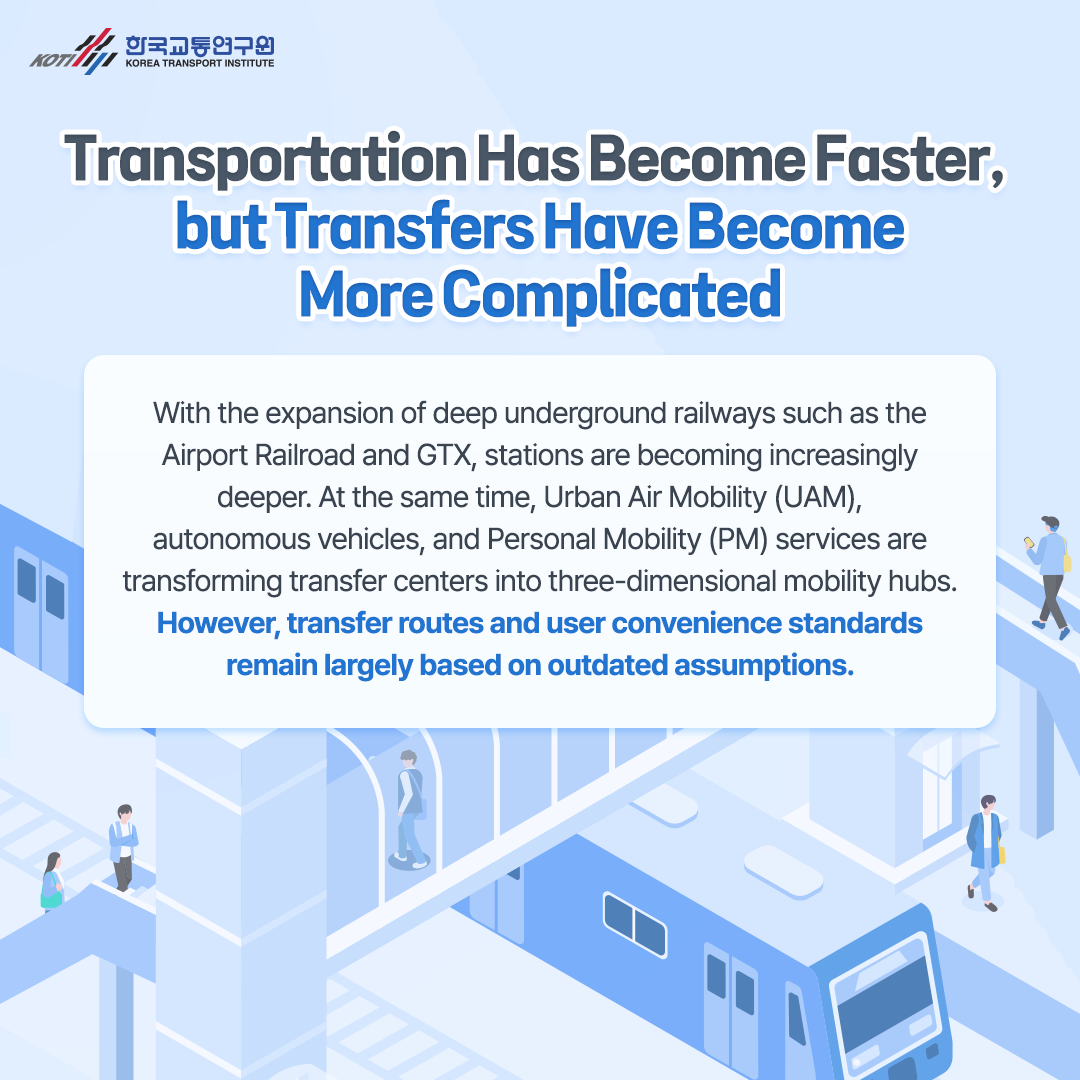
Transportation Has Become Faster, but Transfers Have Become More Complicated
With the expansion of deep underground railways such as the Airport Railroad and GTX, stations are becoming increasingly deeper.
At the same time, Urban Air Mobility (UAM), autonomous vehicles, and Personal Mobility (PM) services are transforming transfer centers into three-dimensional mobility hubs.
However, transfer routes and user convenience standards remain largely based on outdated assumptions.
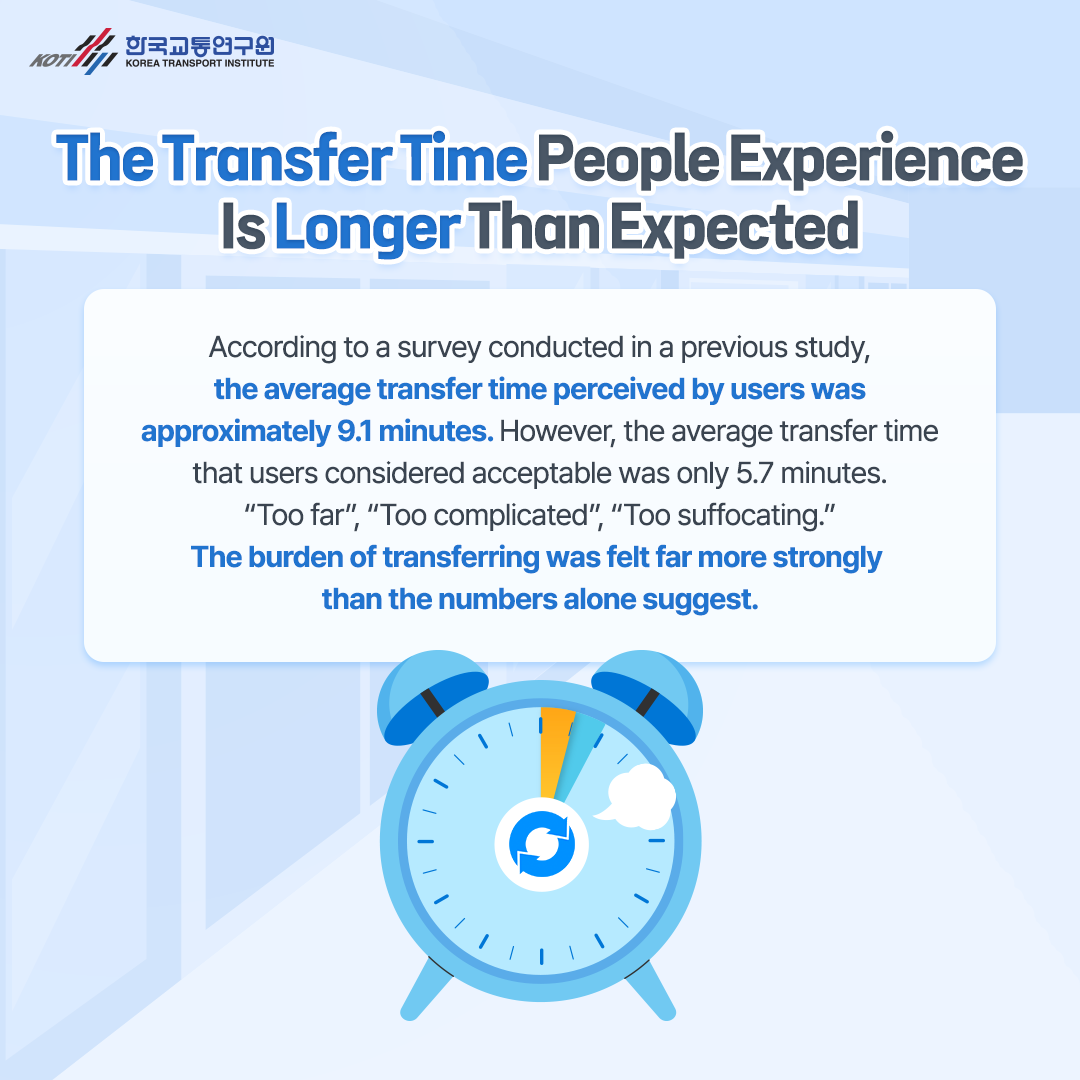
The Transfer Time People Experience Is Longer Than Expected
According to a survey conducted in a previous study, the average transfer time perceived by users was approximately 9.1 minutes.
However, the average transfer time that users considered acceptable was only 5.7 minutes.
“Too far”, “Too complicated”, “Too suffocating.”
The burden of transferring was felt far more strongly than the numbers alone suggest.
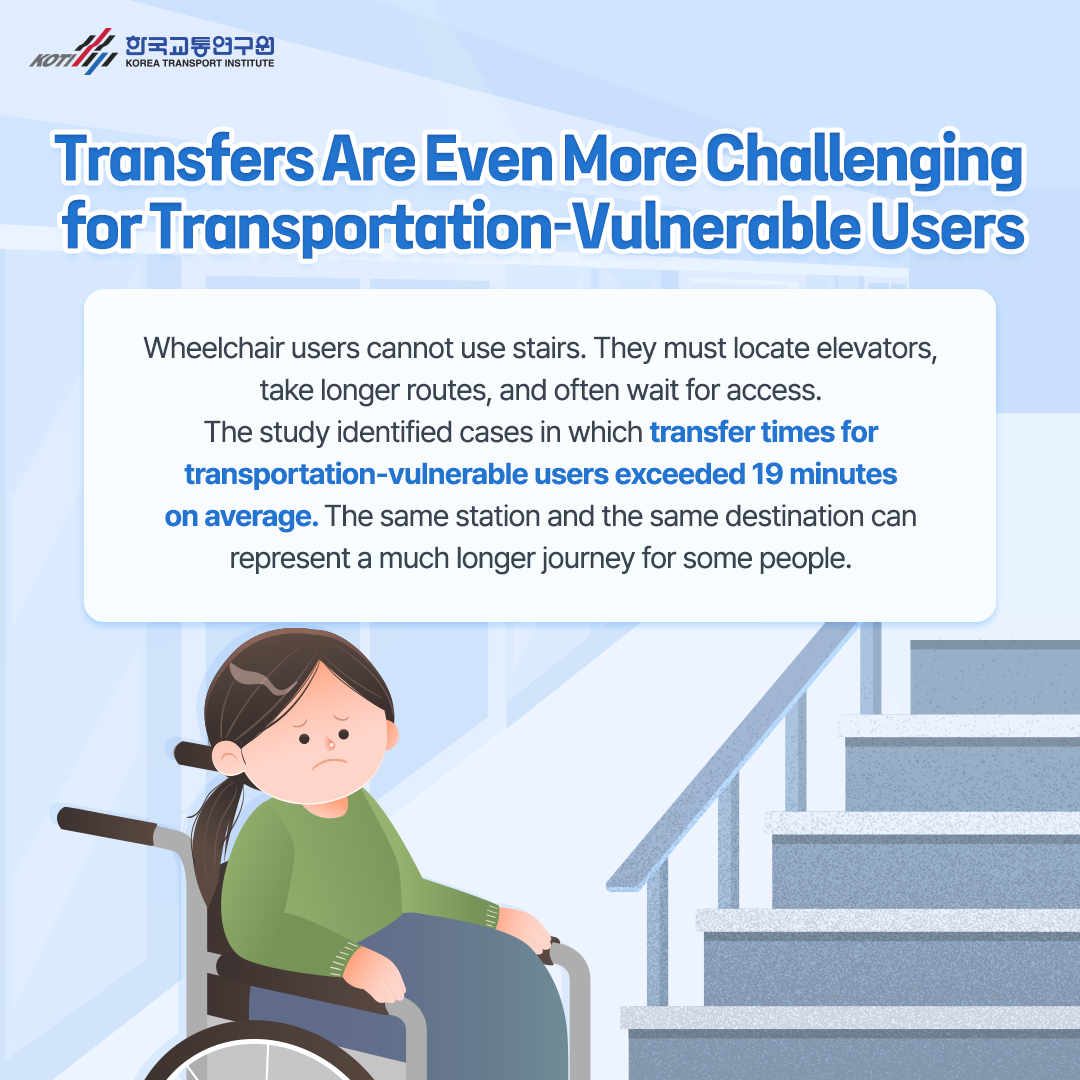
Transfers Are Even More Challenging for Transportation-Vulnerable Users
Wheelchair users cannot use stairs.
They must locate elevators, take longer routes, and often wait for access.
The study identified cases in which transfer times for transportation-vulnerable users exceeded 19 minutes on average.
The same station and the same destination can represent a much longer journey for some people.
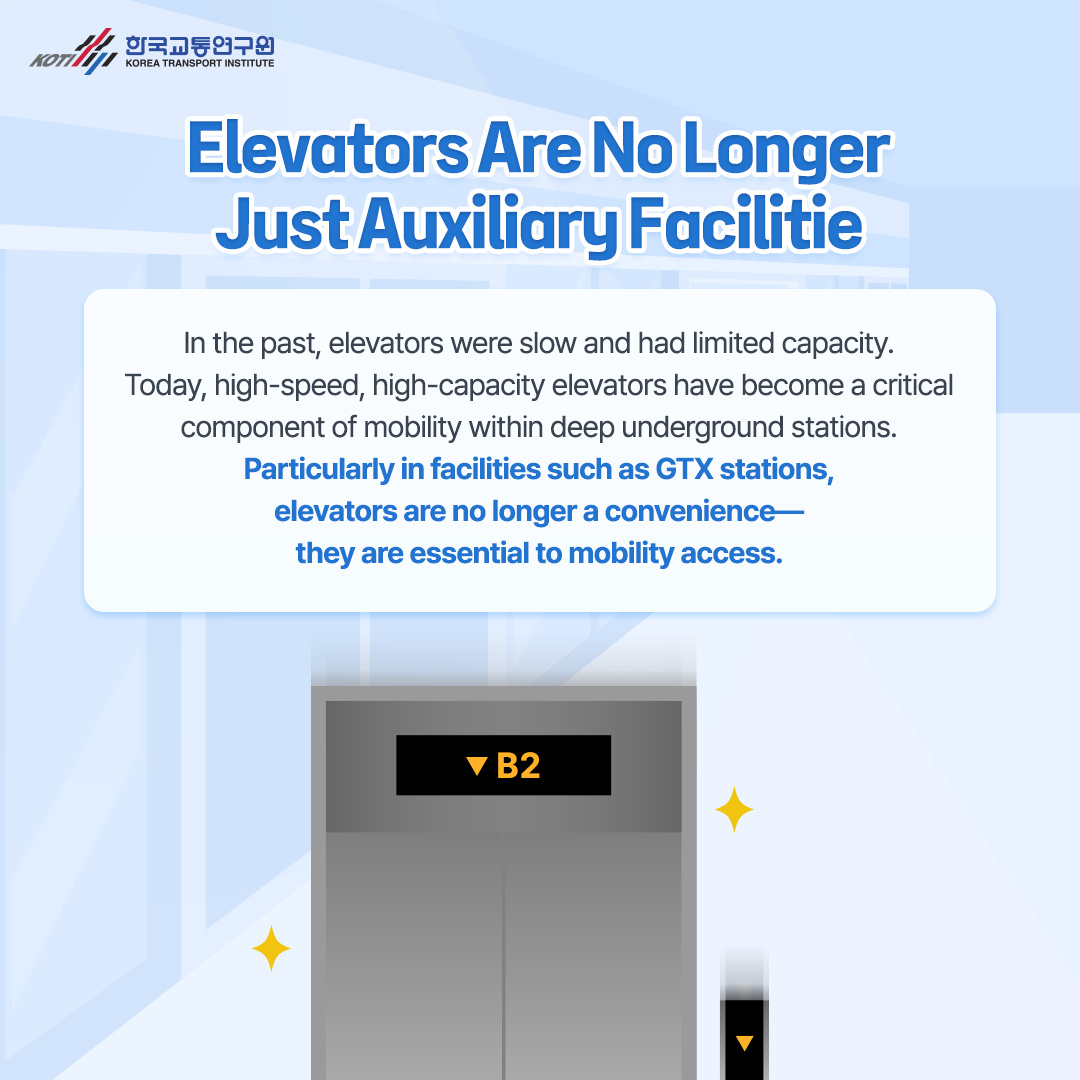
Elevators Are No Longer Just Auxiliary Facilities
In the past, elevators were slow and had limited capacity.
Today, high-speed, high-capacity elevators have become a critical component of mobility within deep underground stations.
Particularly in facilities such as GTX stations, elevators are no longer a convenience—they are essential to mobility access.
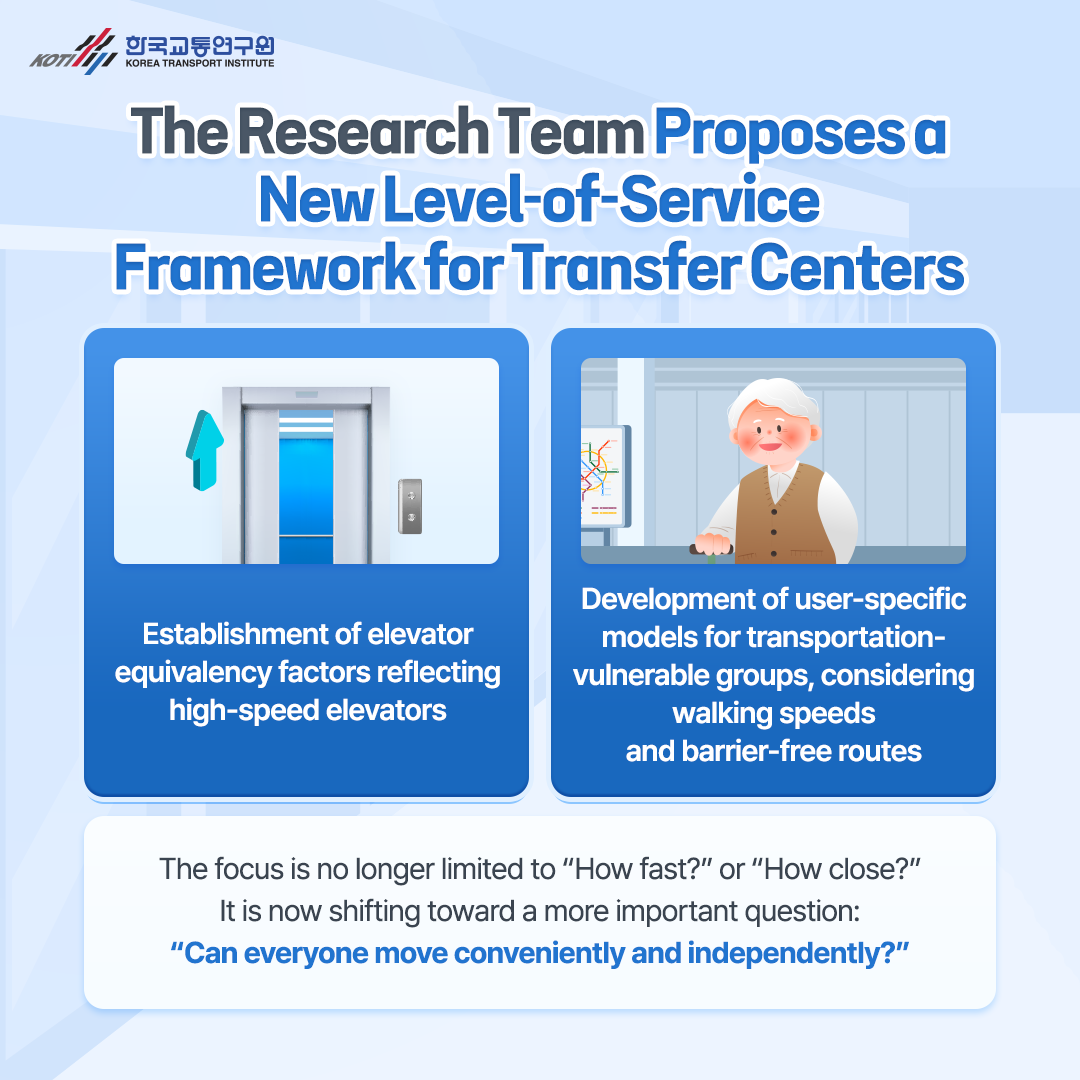
The Research Team Proposes a New Level-of-Service Framework for Transfer Centers
- Establishment of elevator equivalency factors reflecting high-speed elevators
- Development of user-specific models for transportation-vulnerable groups, considering walking speeds and barrier-free routes
The focus is no longer limited to “How fast?” or “How close?”
It is now shifting toward a more important question: “Can everyone move conveniently and independently?”
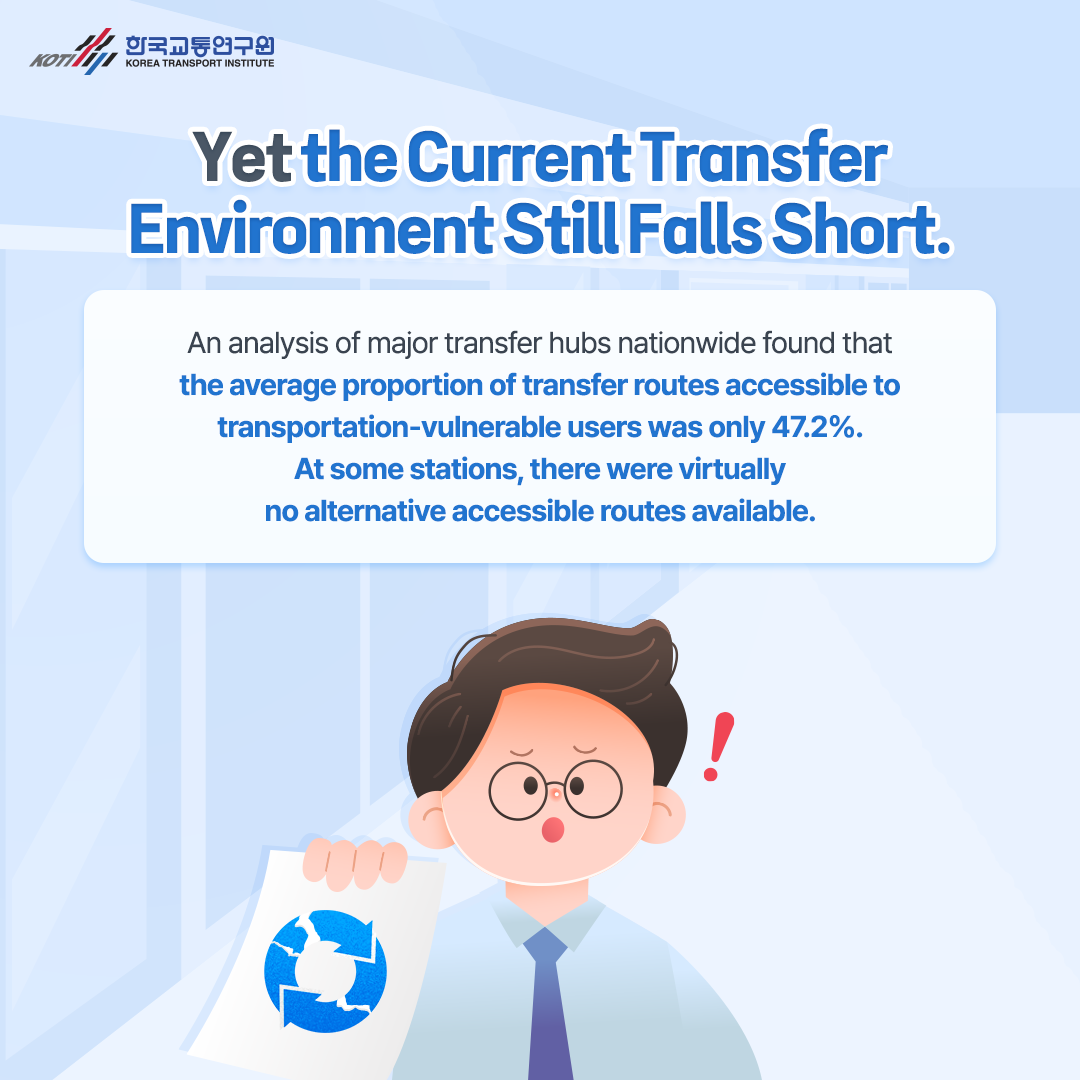
Yet the Current Transfer Environment Still Falls Short.
An analysis of major transfer hubs nationwide found that the average proportion of transfer routes accessible to transportation-vulnerable users was only 47.2%.
At some stations, there were virtually no alternative accessible routes available.
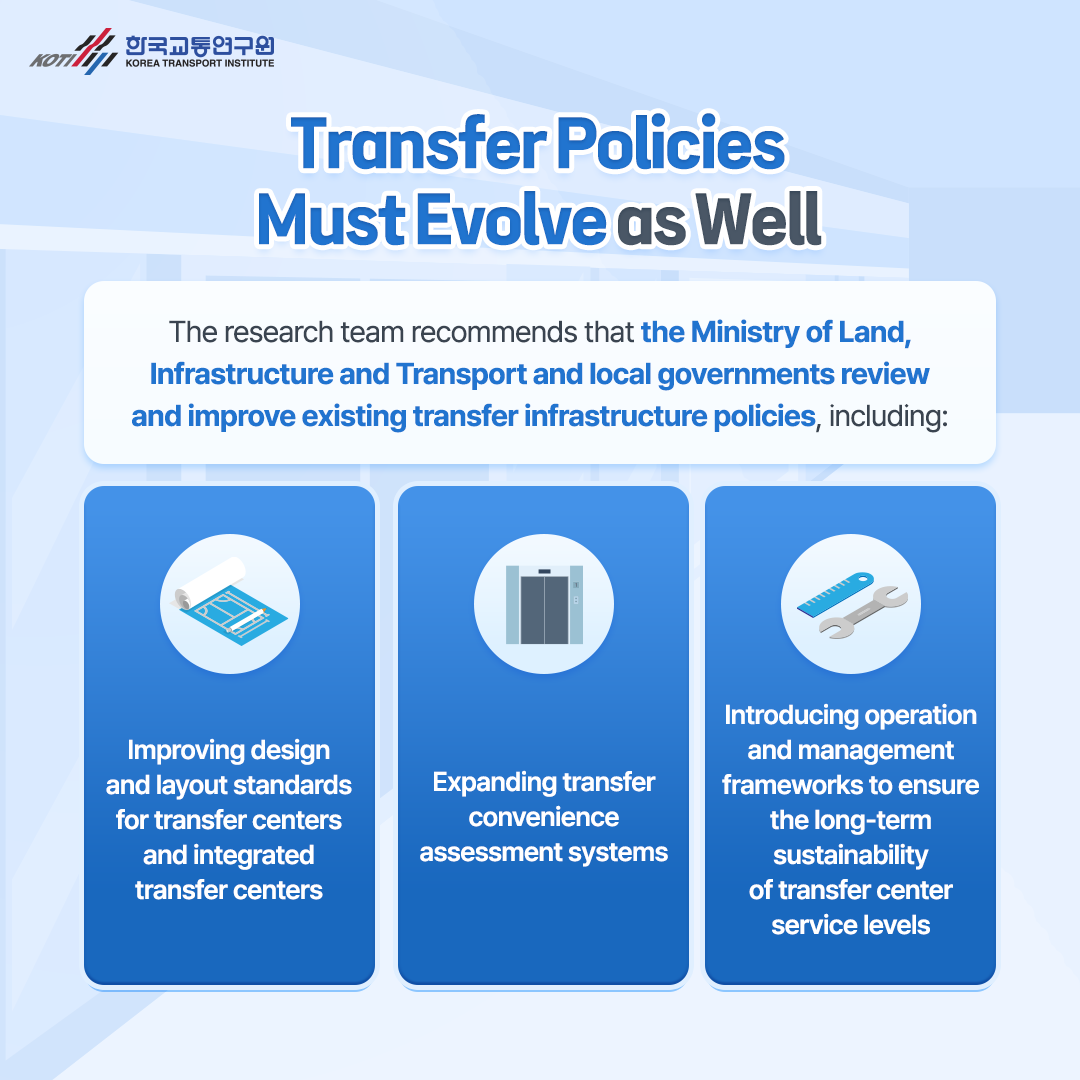
Transfer Policies Must Evolve as Well
The research team recommends that the Ministry of Land, Infrastructure and Transport and local governments review and improve existing transfer infrastructure policies, including:
- Improving design and layout standards for transfer centers and integrated transfer centers
- Expanding transfer convenience assessment systems
- Introducing operation and management frameworks to ensure the long-term sustainability of transfer center service levels
Toward Cities Where Everyone Can Move Without Barriers
Introducing faster transportation modes is important.
But even more important is creating a society in which everyone can travel comfortably.
So that older adults, children, and persons with disabilities can transfer easily and efficiently.
Building a transfer environment that is convenient and accessible for everyone, everywhere, is no longer a task that can be postponed.
* This card news content is based on the research report, “Improvement Measures for Building Transfer Infrastructure to Respond to Mobility Innovation and Enhance Transfer Convenience,” conducted as part of the institutional research program of the Korea Transport Institute, and has been partially revised and supplemented.