Card News

NEWS
KOTI - Korea Transport institute
Feeds and Updates
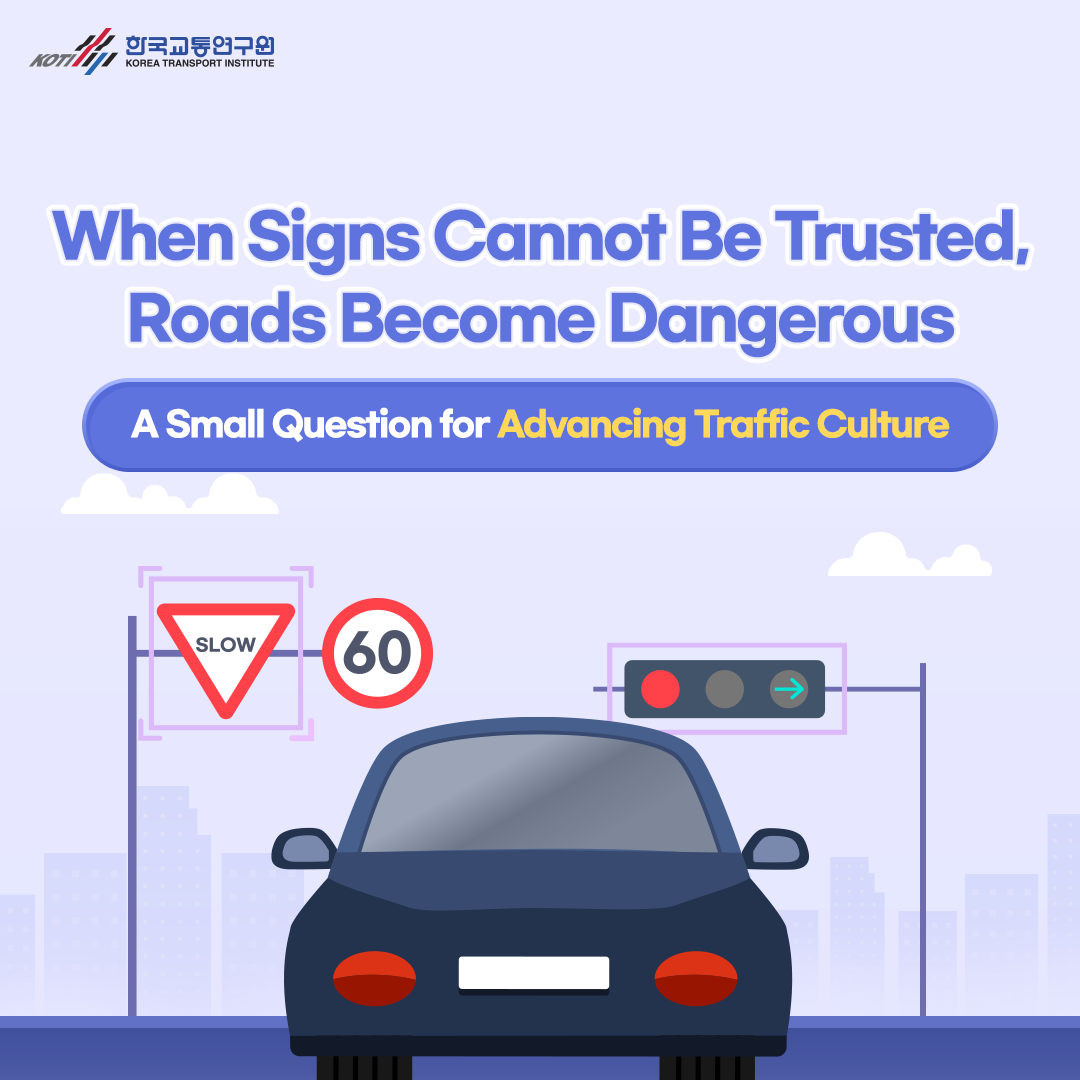
When Signs Cannot Be Trusted, Roads Become Dangerous – A Small Question for Advancing Traffic Culture –
March 27 2026
-
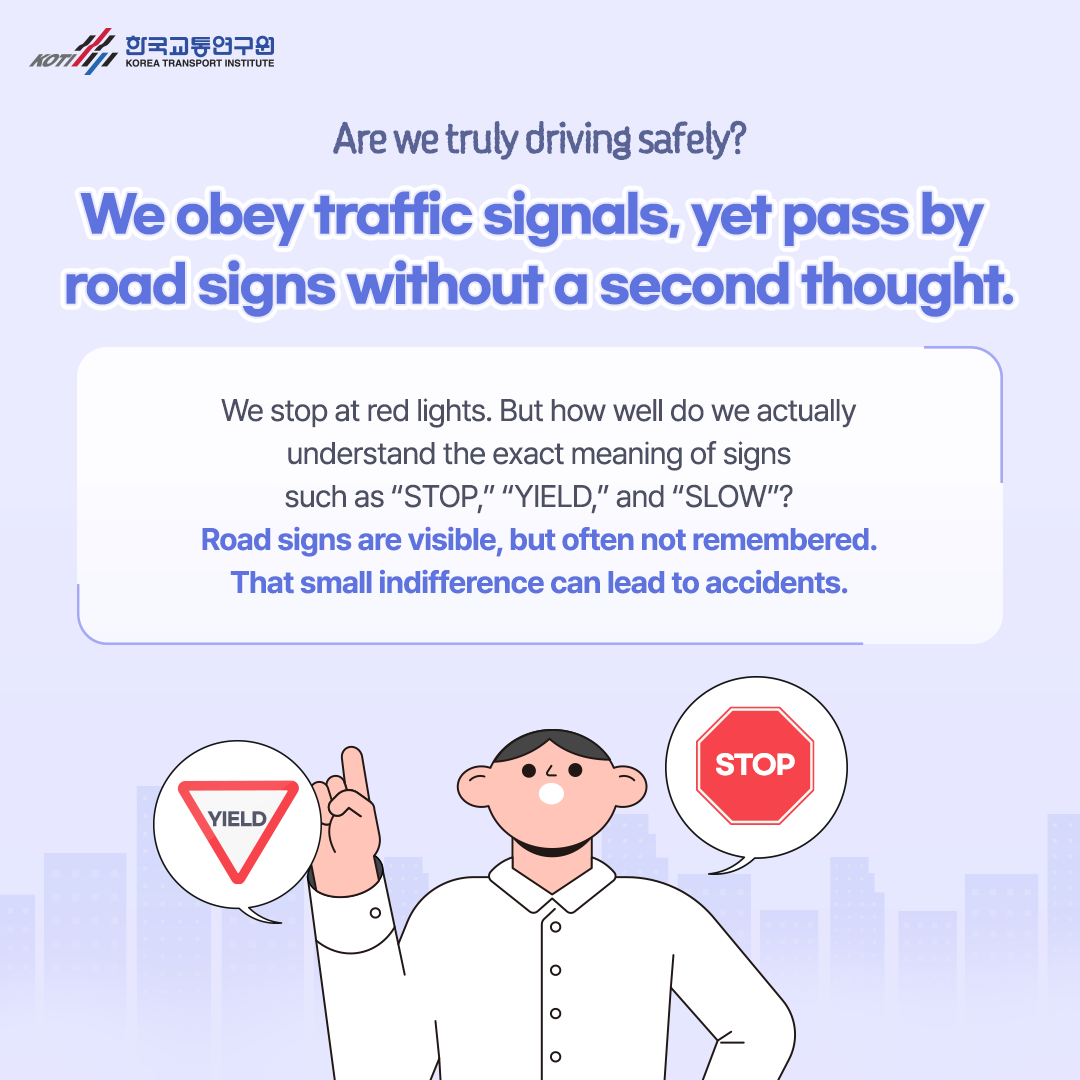
Are we truly driving safely?
We obey traffic signals, yet pass by road signs without a second thought.
We stop at red lights.
But how well do we actually understand the exact meaning of signs such as “STOP,” “YIELD,” and “SLOW”?
Road signs are visible, but often not remembered.
That small indifference can lead to accidents.
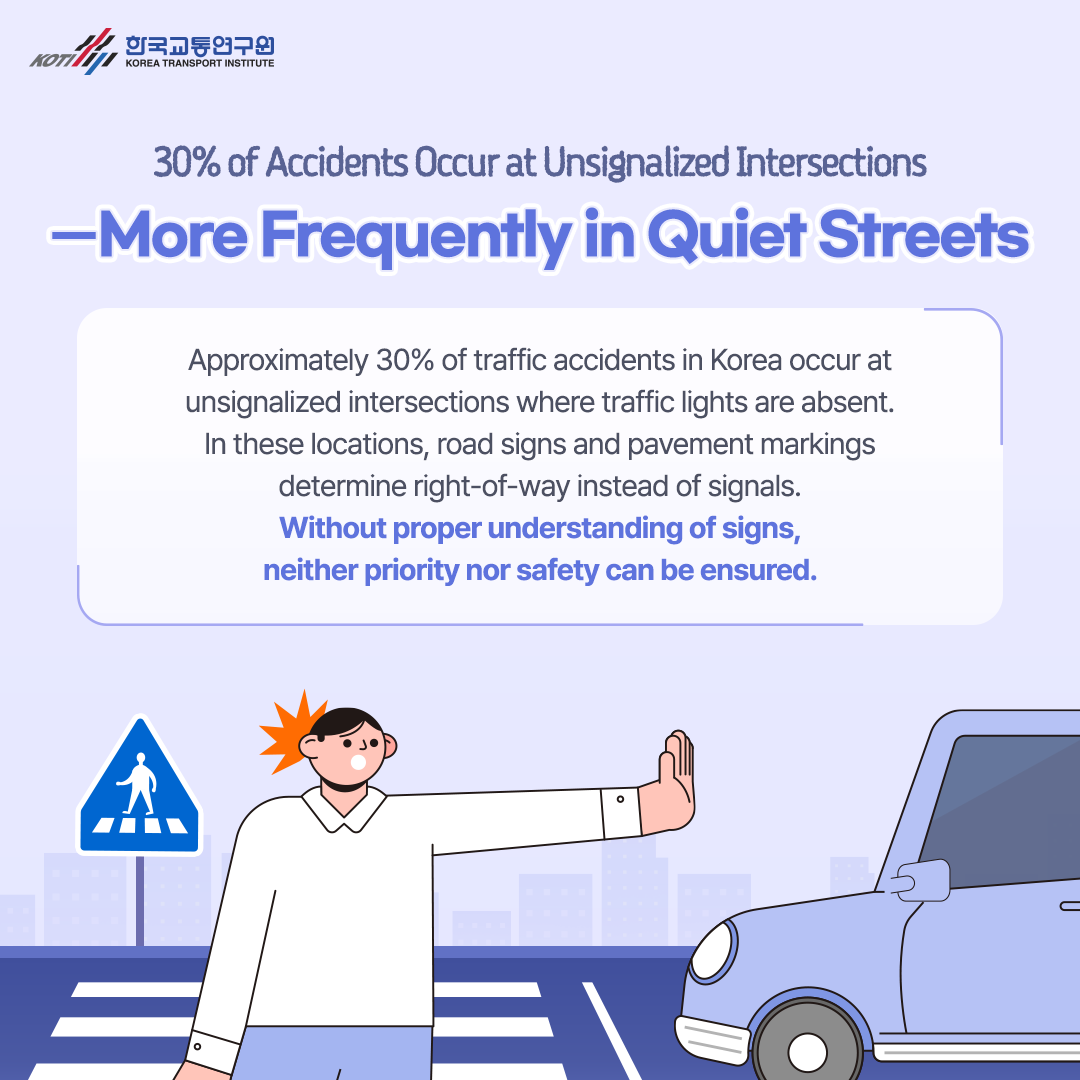
30% of Accidents Occur at Unsignalized Intersections—More Frequently in Quiet Streets
Approximately 30% of traffic accidents in Korea occur at unsignalized intersections where traffic lights are absent.
In these locations, road signs and pavement markings determine right-of-way instead of signals.
Without proper understanding of signs, neither priority nor safety can be ensured.
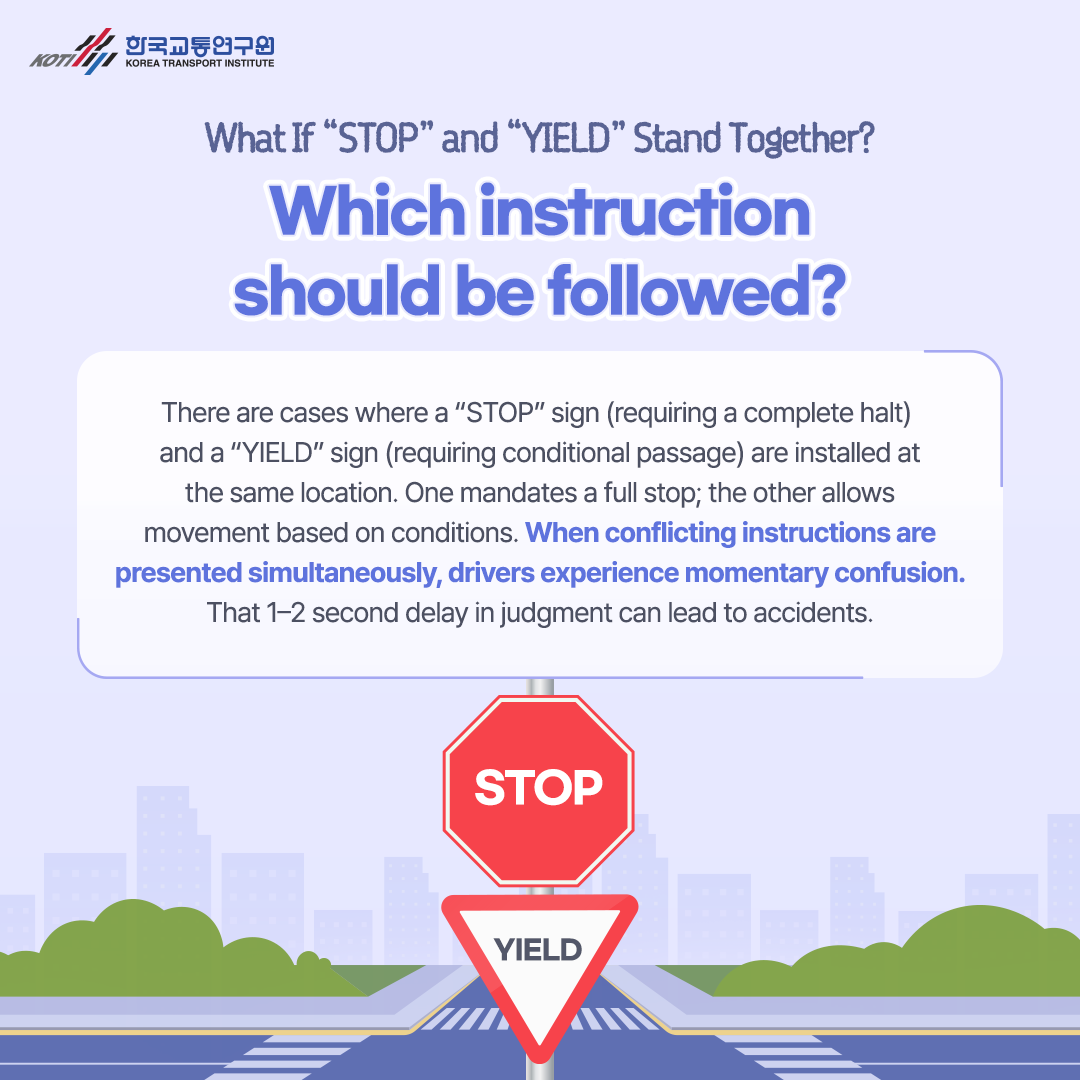
What If “STOP” and “YIELD” Stand Together?
Which instruction should be followed?
There are cases where a “STOP” sign (requiring a complete halt) and a “YIELD” sign (requiring conditional passage) are installed at the same location.
One mandates a full stop; the other allows movement based on conditions.
When conflicting instructions are presented simultaneously, drivers experience momentary confusion.
That 1–2 second delay in judgment can lead to accidents.
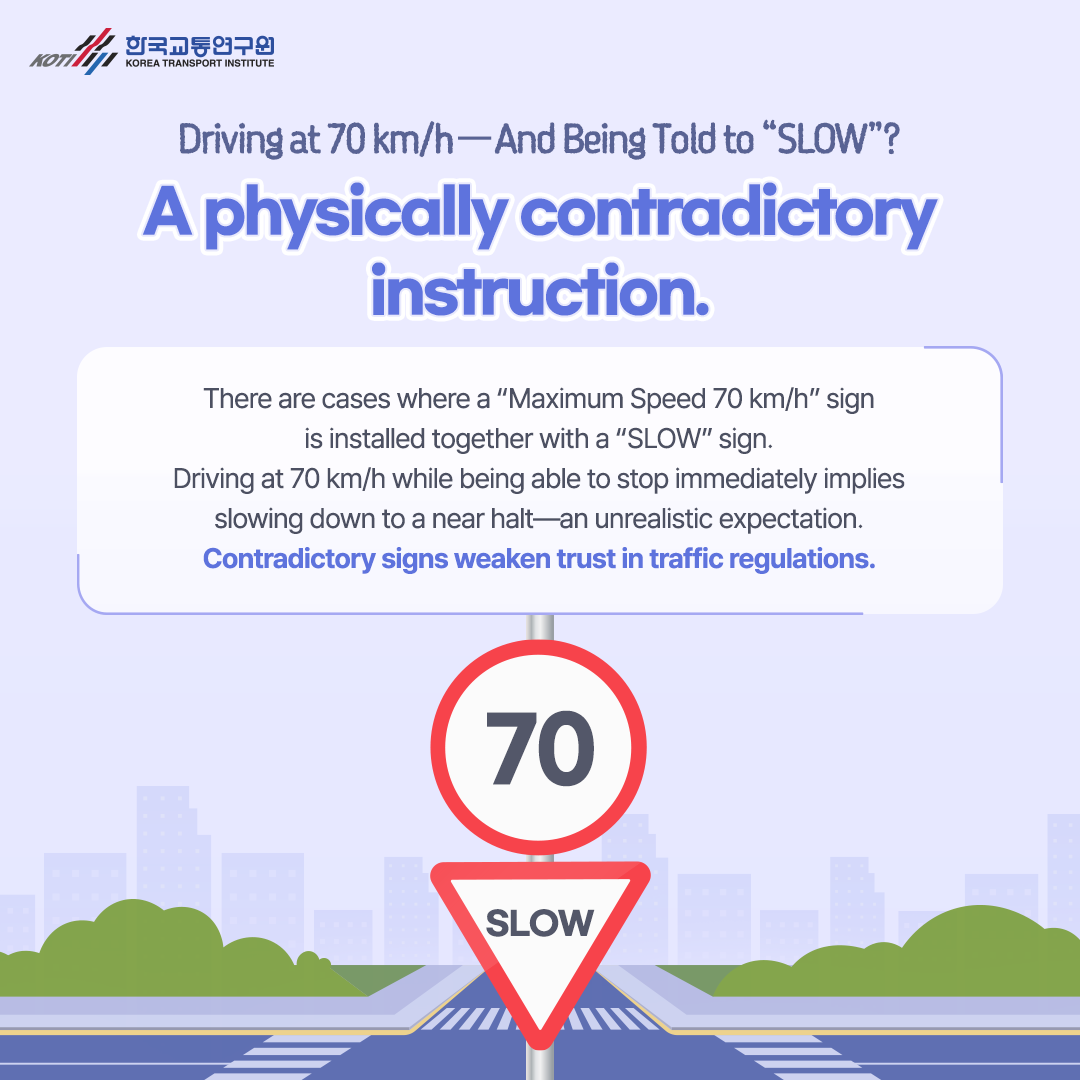
Driving at 70 km/h—And Being Told to “SLOW”?
A physically contradictory instruction.
There are cases where a “Maximum Speed 70 km/h” sign is installed together with a “SLOW” sign.
Driving at 70 km/h while being able to stop immediately implies slowing down to a near halt—an unrealistic expectation.
Contradictory signs weaken trust in traffic regulations.
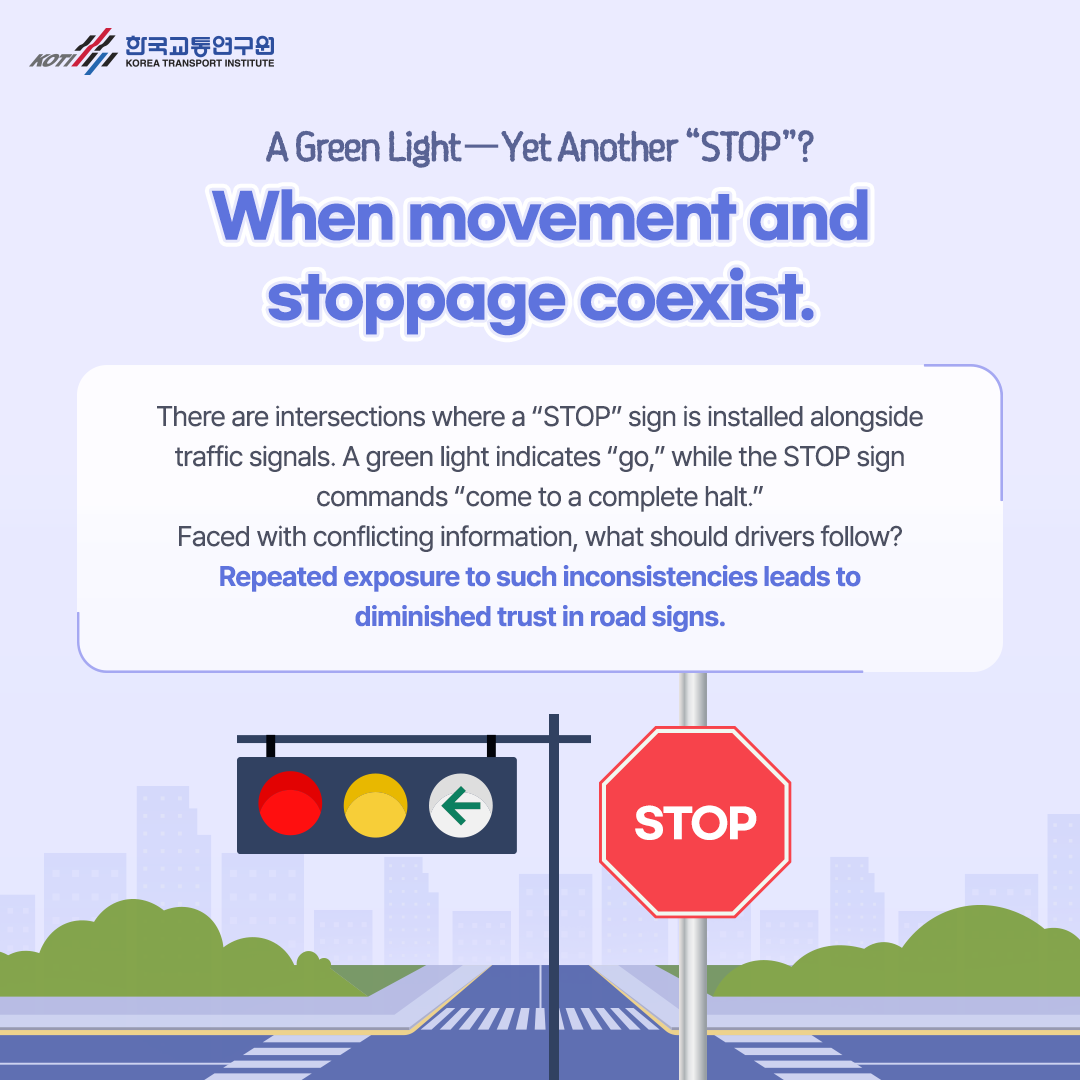
A Green Light—Yet Another “STOP”?
When movement and stoppage coexist.
There are intersections where a “STOP” sign is installed alongside traffic signals.
A green light indicates “go,” while the STOP sign commands “come to a complete halt.”
Faced with conflicting information, what should drivers follow?
Repeated exposure to such inconsistencies leads to diminished trust in road signs.
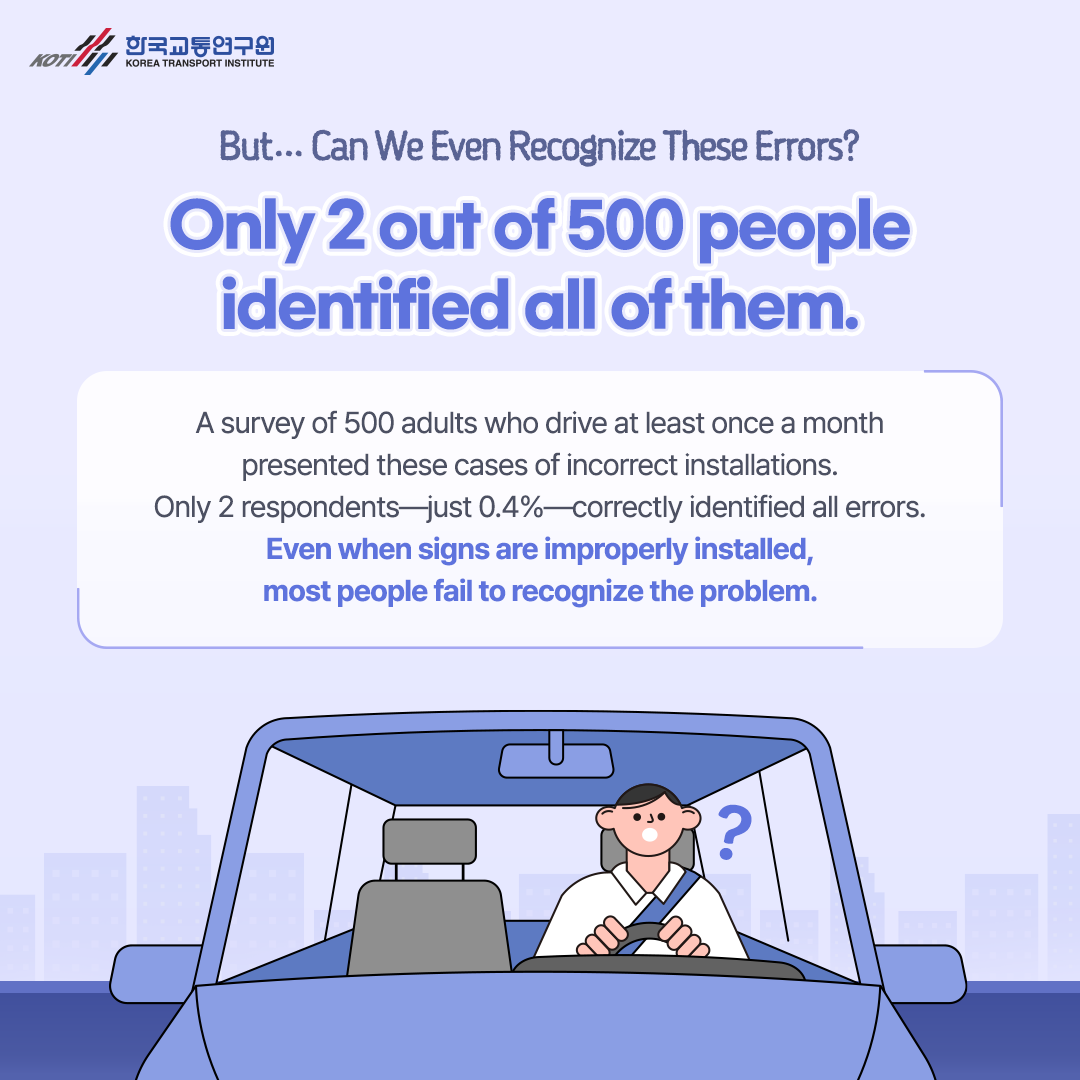
But… Can We Even Recognize These Errors?
Only 2 out of 500 people identified all of them.
A survey of 500 adults who drive at least once a month presented these cases of incorrect installations.
Only 2 respondents—just 0.4%—correctly identified all errors.
Even when signs are improperly installed, most people fail to recognize the problem.
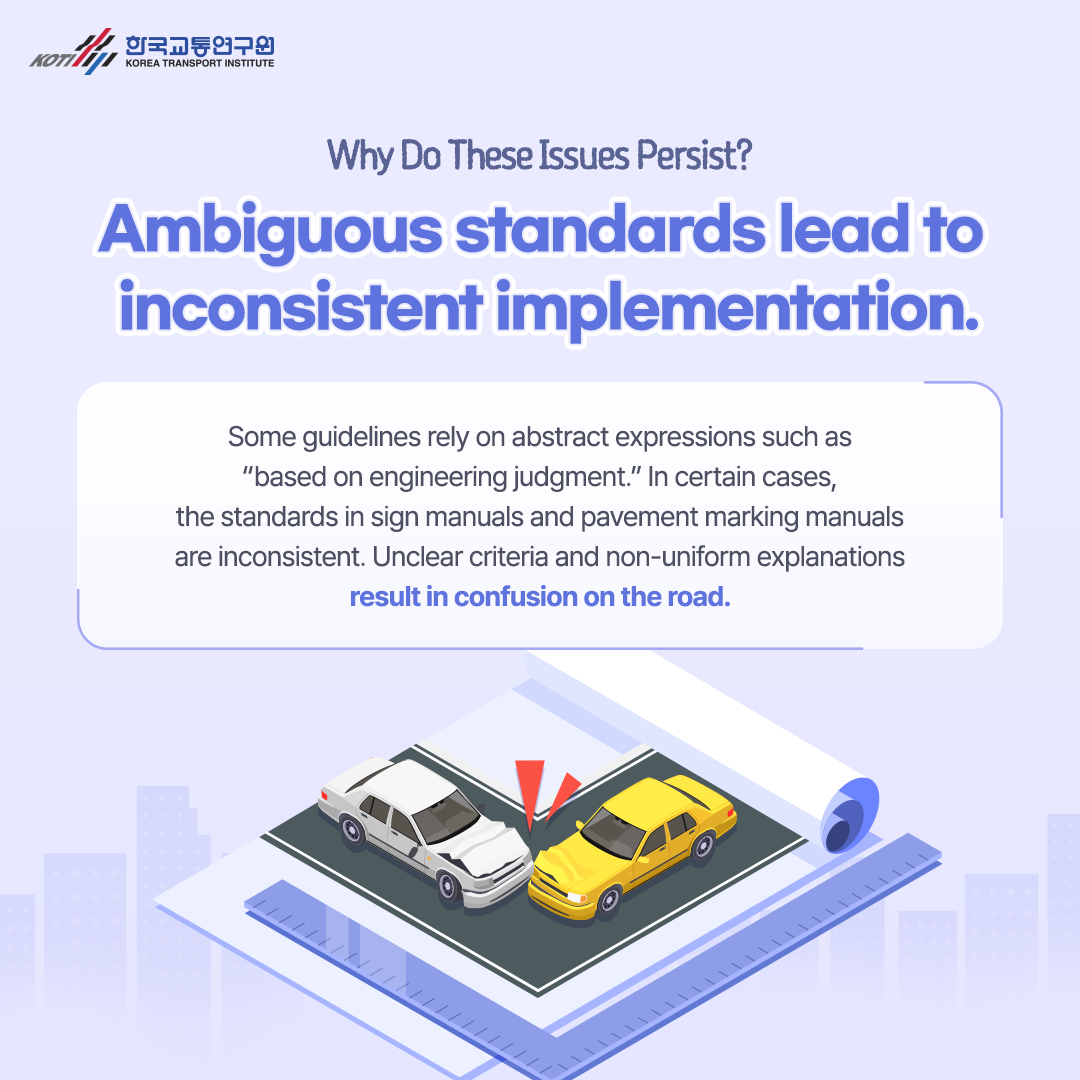
Why Do These Issues Persist?
Ambiguous standards lead to inconsistent implementation.
Some guidelines rely on abstract expressions such as “based on engineering judgment.”
In certain cases, the standards in sign manuals and pavement marking manuals are inconsistent.
Unclear criteria and non-uniform explanations result in confusion on the road.
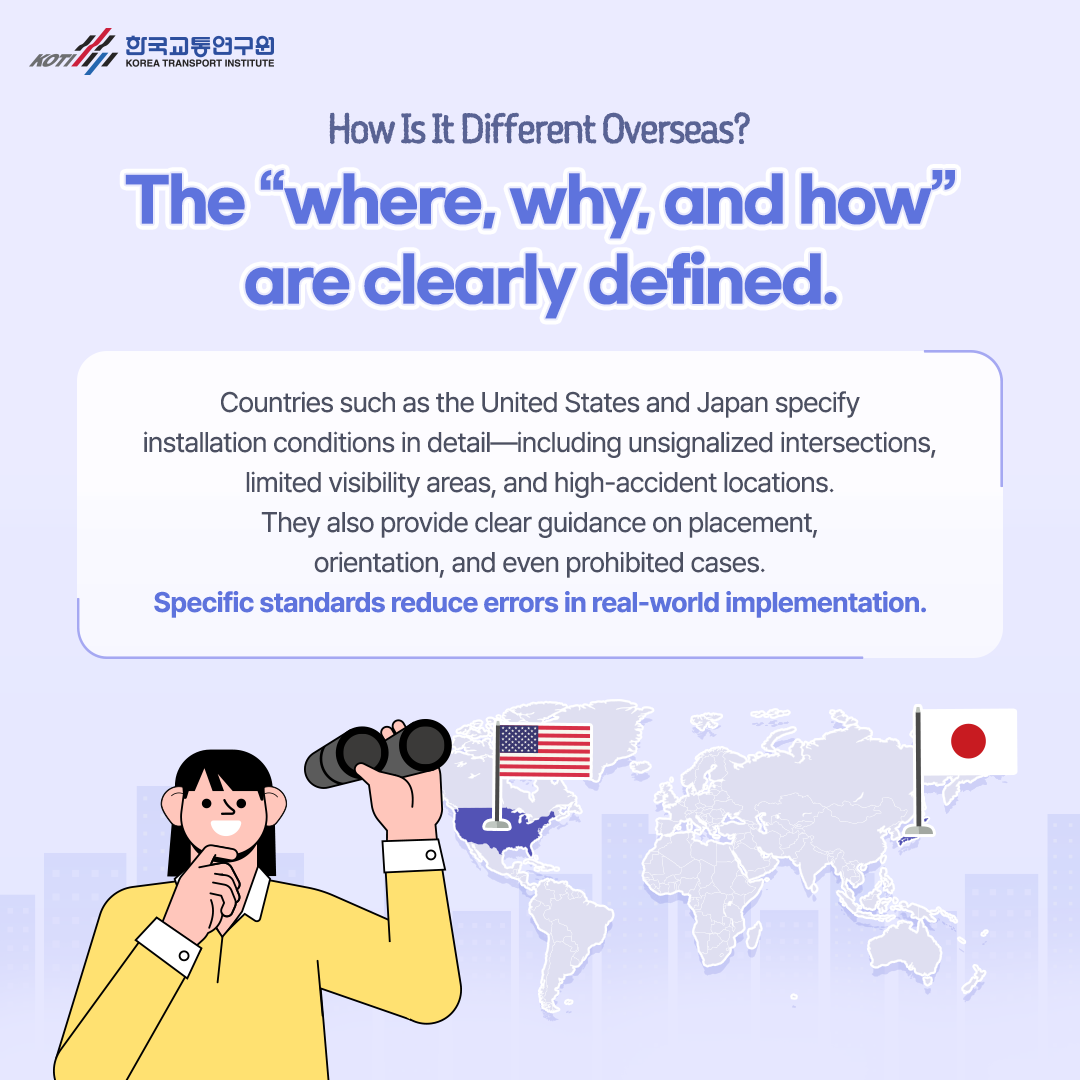
How Is It Different Overseas?
The “where, why, and how” are clearly defined.
Countries such as the United States and Japan specify installation conditions in detail—
including unsignalized intersections, limited visibility areas, and high-accident locations.
They also provide clear guidance on placement, orientation, and even prohibited cases.
Specific standards reduce errors in real-world implementation.
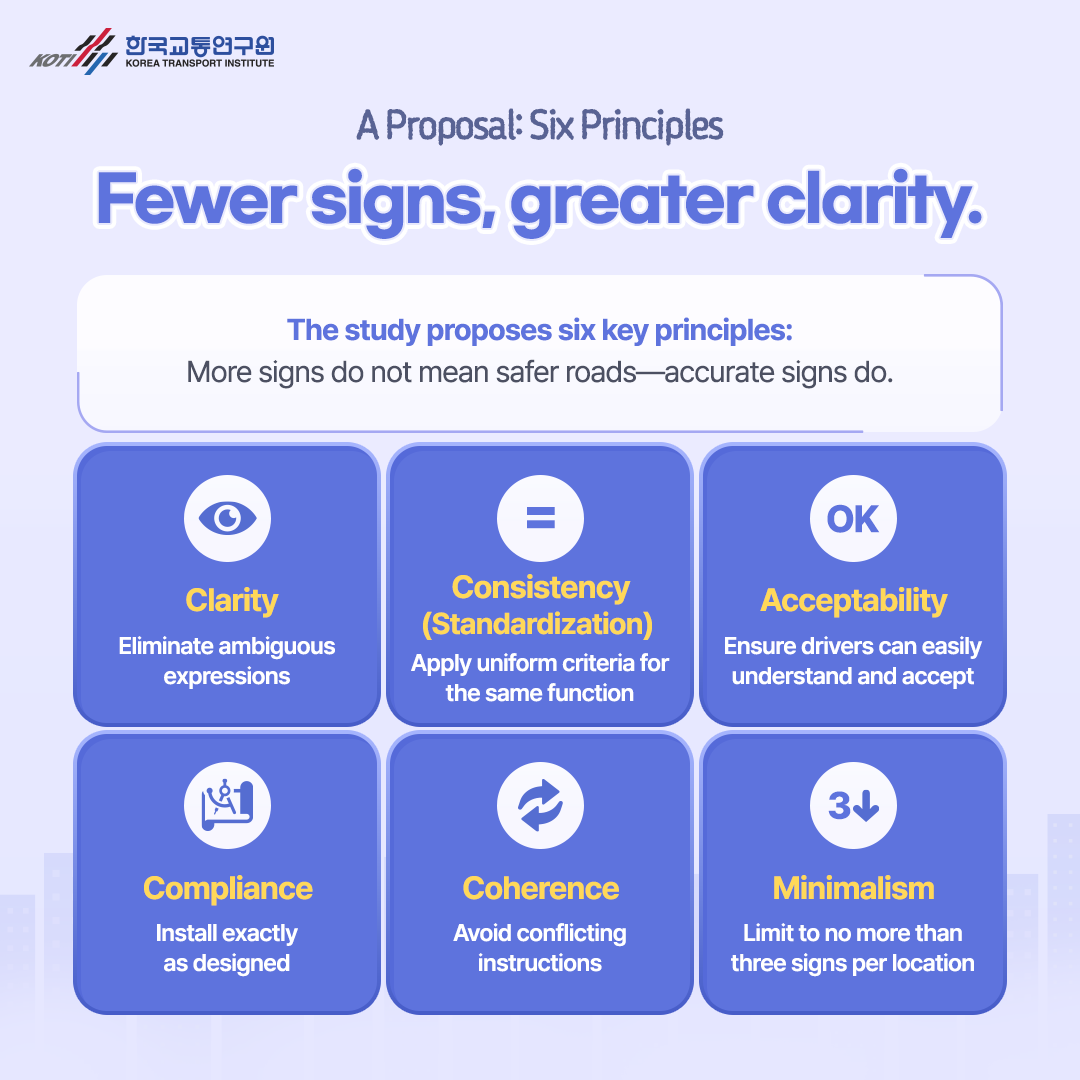
A Proposal: Six Principles
Fewer signs, greater clarity.
The study proposes six key principles:
More signs do not mean safer roads—accurate signs do.
✔ Clarity – Eliminate ambiguous expressions
✔ Consistency (Standardization) – Apply uniform criteria for the same function
✔ Acceptability – Ensure drivers can easily understand and accept
✔ Compliance – Install exactly as designed
✔ Coherence – Avoid conflicting instructions
✔ Minimalism – Limit to no more than three signs per location
Post-Installation Inspection Is Essential
Incorrectly installed signs must not be left unattended.
Improvements in management systems are required, including:
development of casebooks on errors, introduction of checklists, and establishment of post-installation inspection processes.
Only when both policy and practice evolve together can road signs fulfill their intended role.
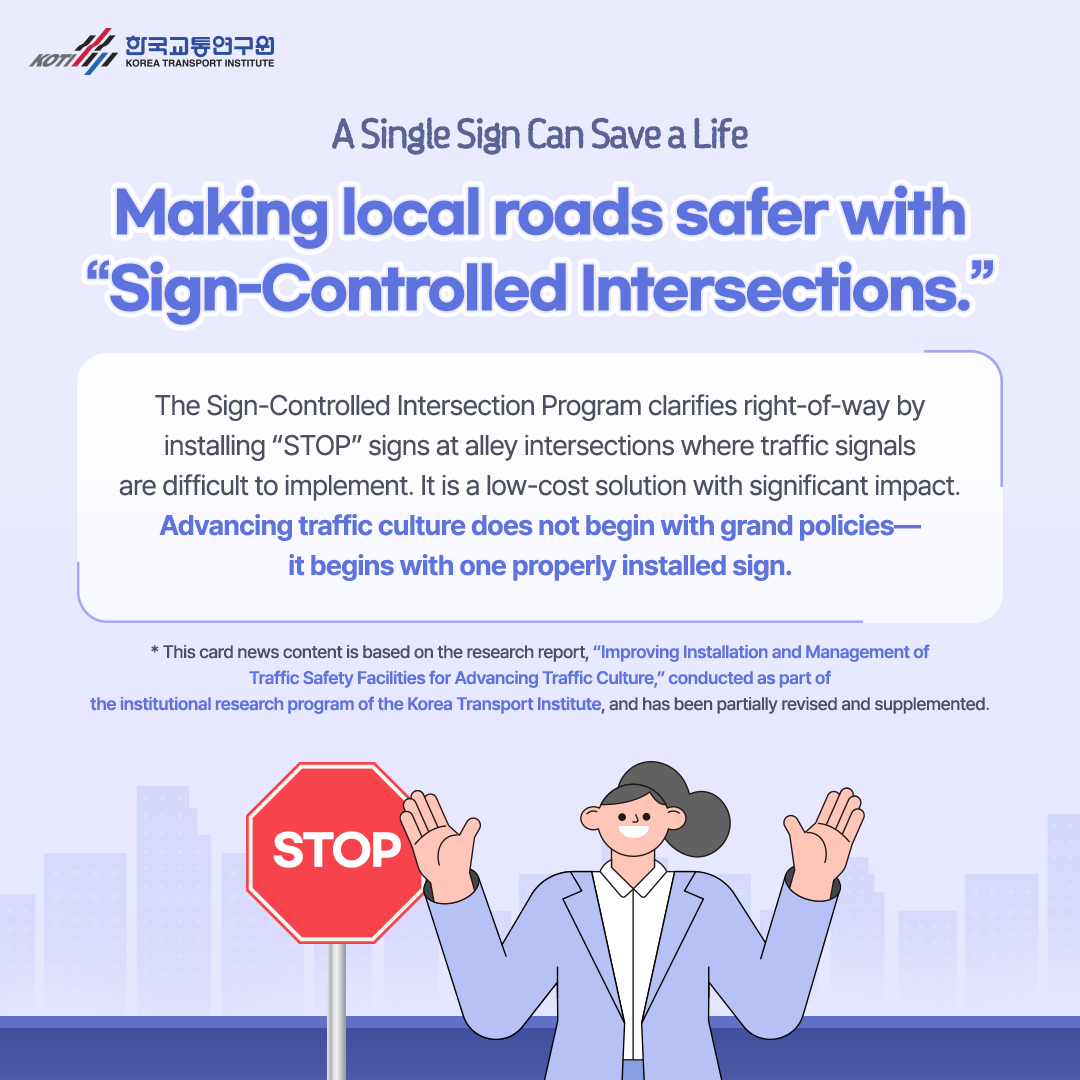
A Single Sign Can Save a Life
Making local roads safer with “Sign-Controlled Intersections.”
The Sign-Controlled Intersection Program clarifies right-of-way by installing “STOP” signs at alley intersections where traffic signals are difficult to implement.
It is a low-cost solution with significant impact.
Advancing traffic culture does not begin with grand policies—
it begins with one properly installed sign.
This card news content is based on the research report, “Improving Installation and Management of Traffic Safety Facilities for Advancing Traffic Culture,” conducted as part of the institutional research program of the Korea Transport Institute, and has been partially revised and supplemented.