Card News

NEWS
KOTI - Korea Transport institute
Feeds and Updates
The Transformation Behind Every Delivery: Logistics in the Age of ESG
February 20 2026
-
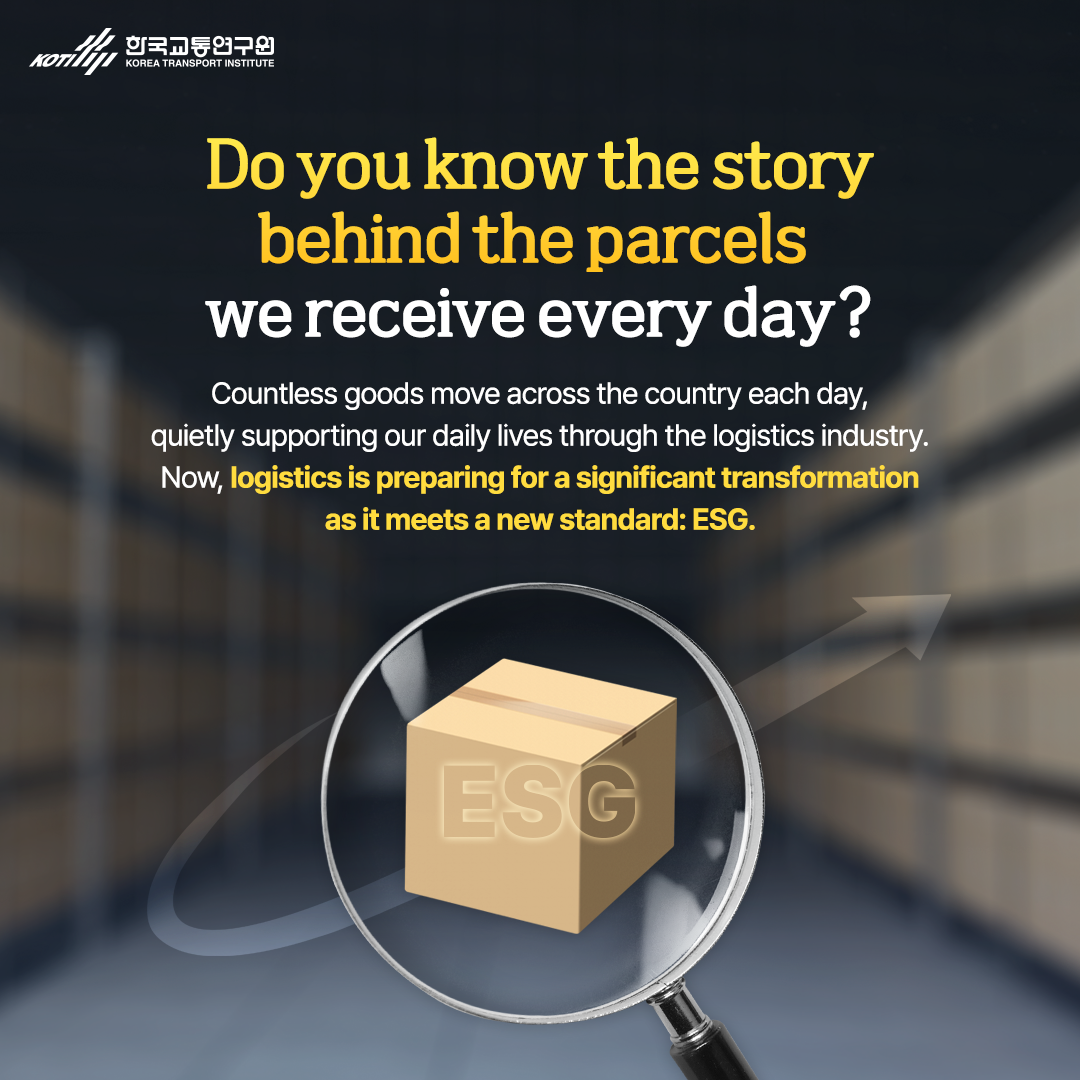
Do you know the story behind the parcels we receive every day?
Countless goods move across the country each day, quietly supporting our daily lives through the logistics industry.
Now, logistics is preparing for a significant transformation as it meets a new standard: ESG.
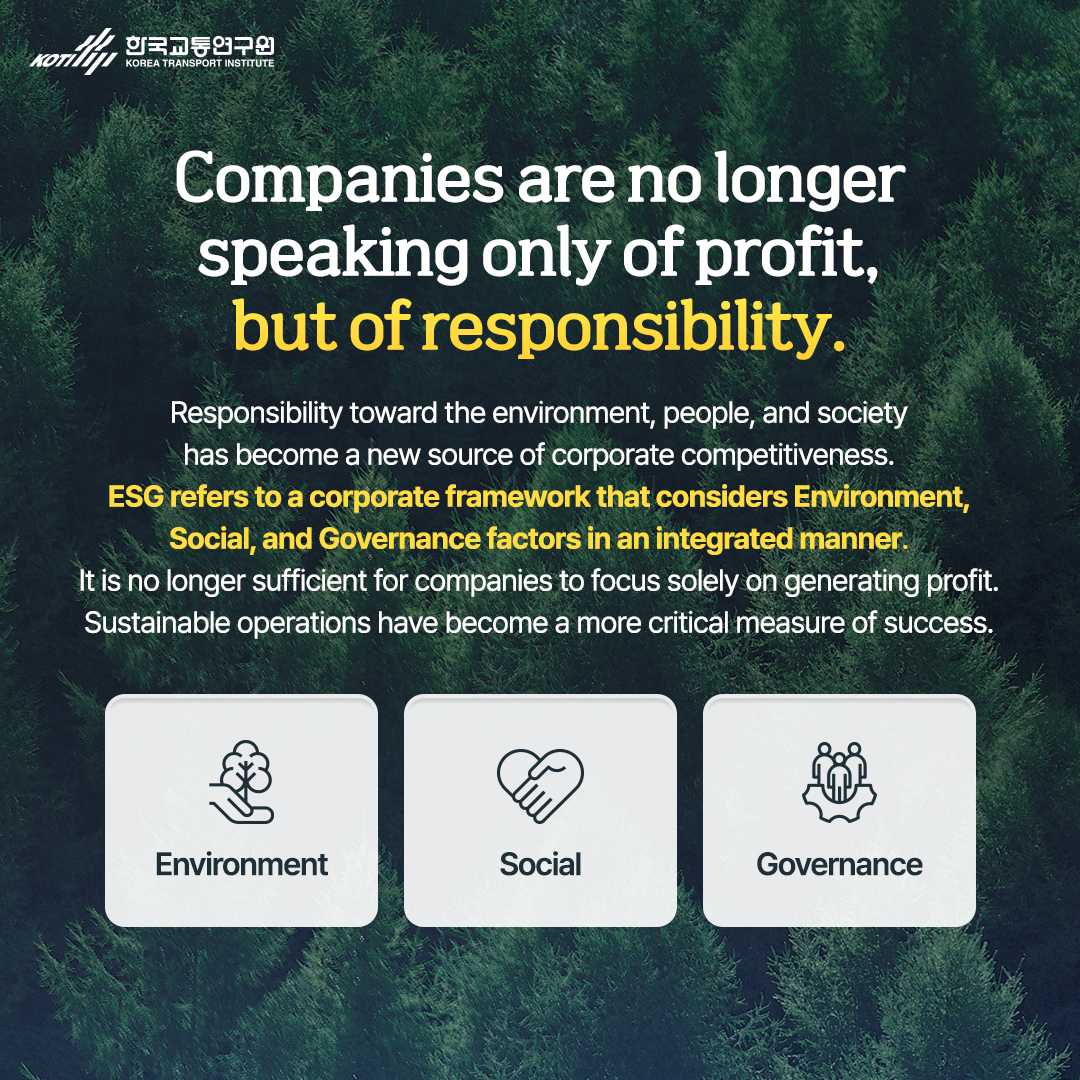
Companies are no longer speaking only of profit, but of responsibility.
Responsibility toward the environment, people, and society has become a new source of corporate competitiveness.
ESG refers to a corporate framework that considers Environment, Social, and Governance factors in an integrated manner.
It is no longer sufficient for companies to focus solely on generating profit.
Sustainable operations have become a more critical measure of success.
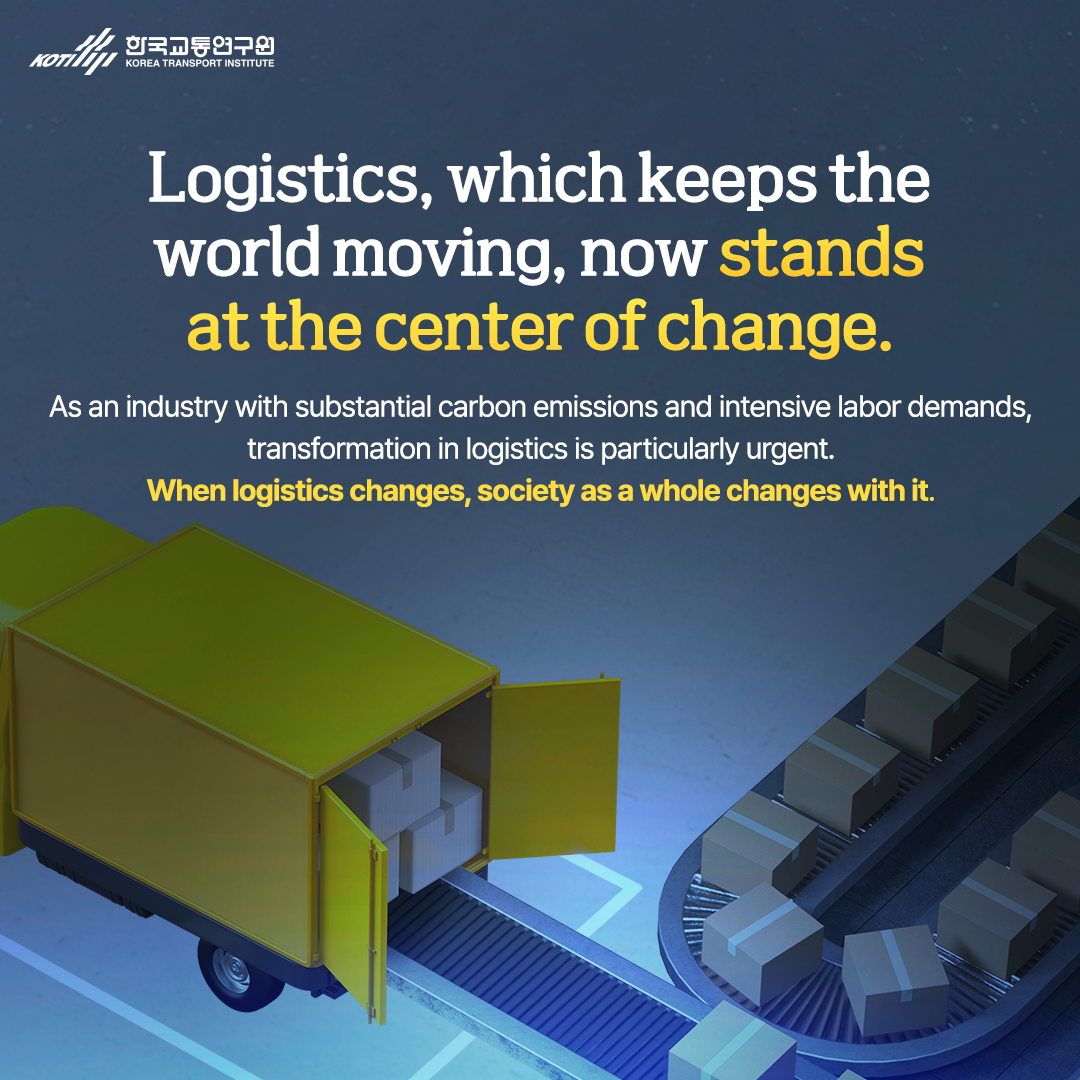
Logistics, which keeps the world moving, now stands at the center of change.
As an industry with substantial carbon emissions and intensive labor demands, transformation in logistics is particularly urgent.
When logistics changes, society as a whole changes with it.
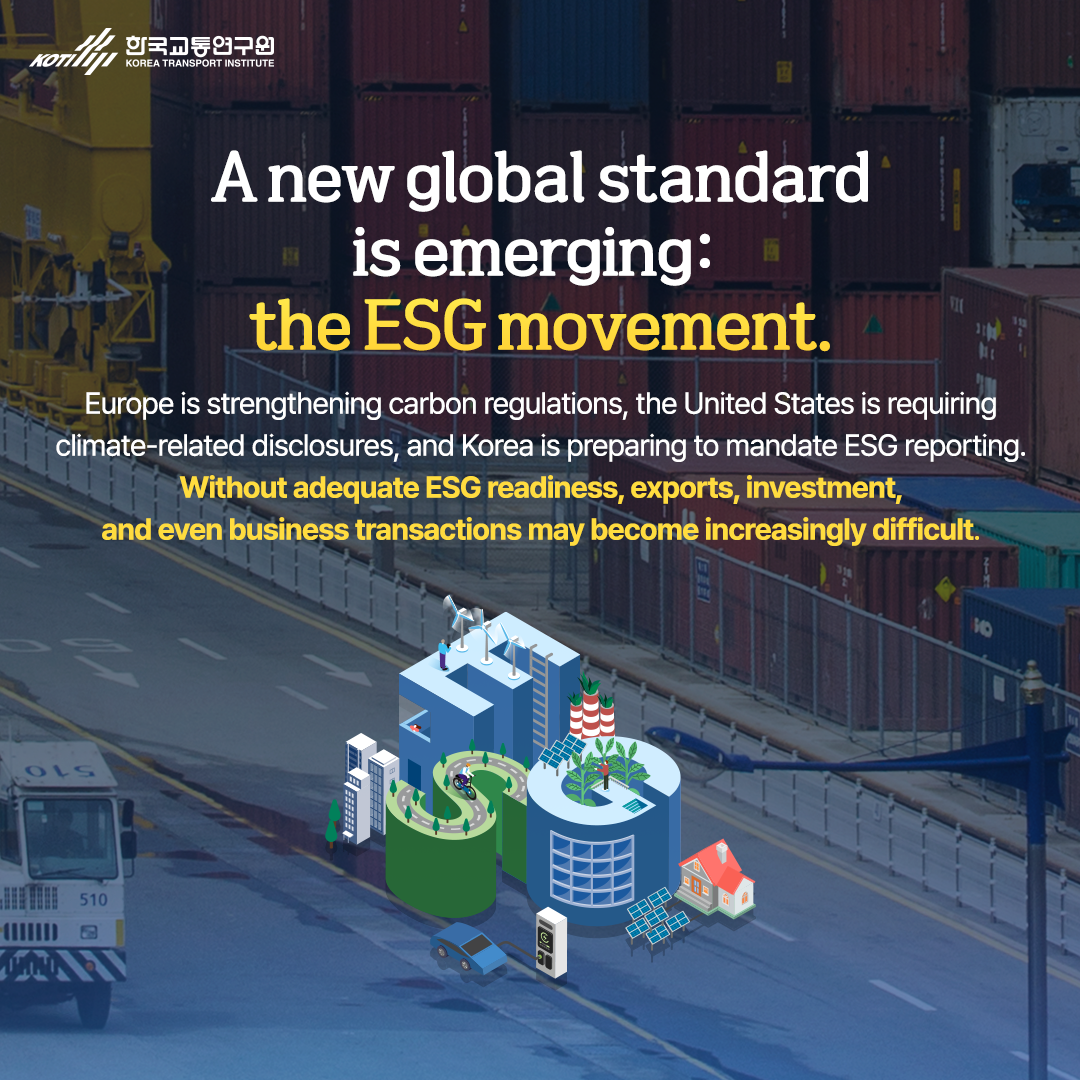
A new global standard is emerging: the ESG movement.
Europe is strengthening carbon regulations, the United States is requiring climate-related disclosures, and Korea is preparing to mandate ESG reporting.
Without adequate ESG readiness, exports, investment, and even business transactions may become increasingly difficult.
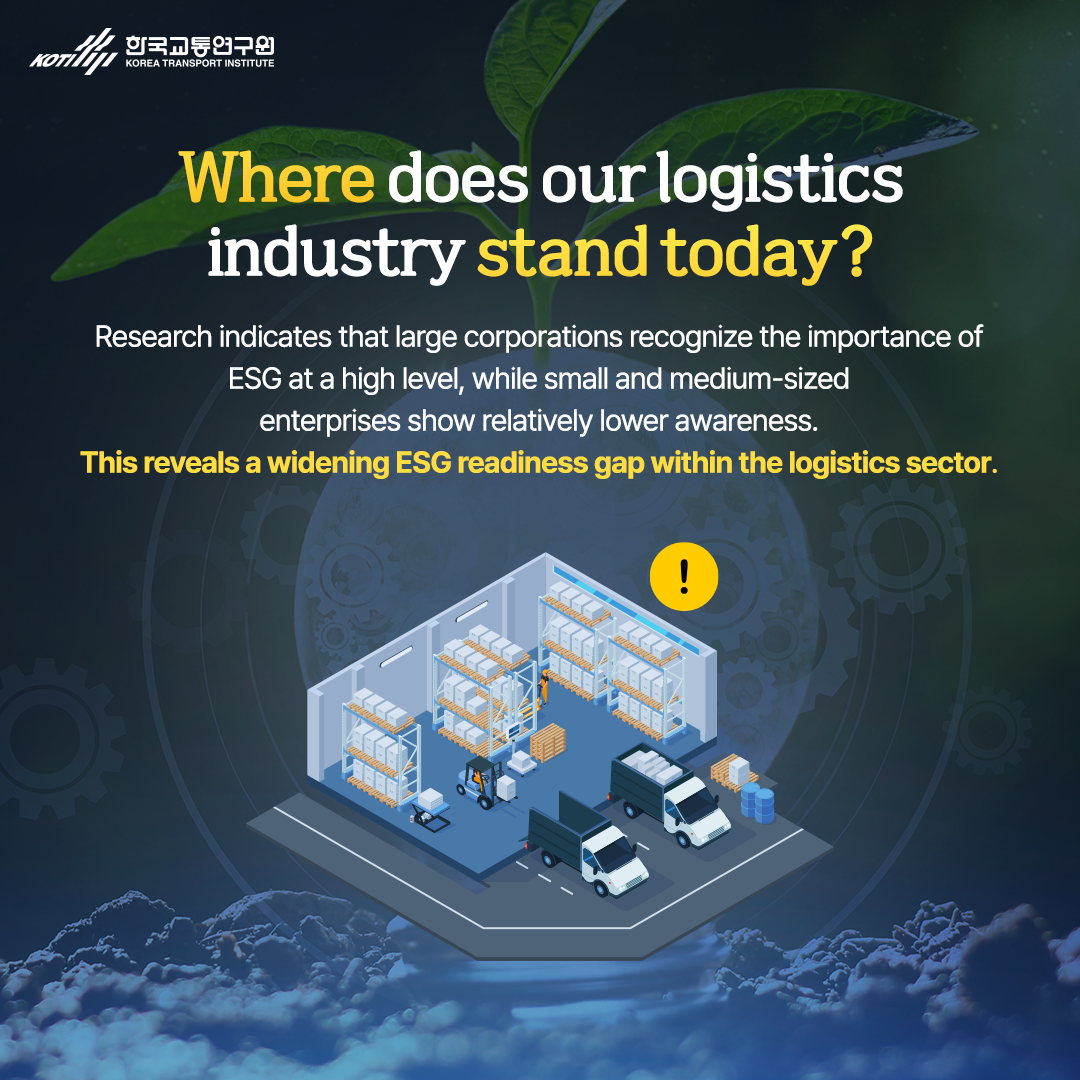
Where does our logistics industry stand today?
Research indicates that large corporations recognize the importance of ESG at a high level, while small and medium-sized enterprises show relatively lower awareness.
This reveals a widening ESG readiness gap within the logistics sector.
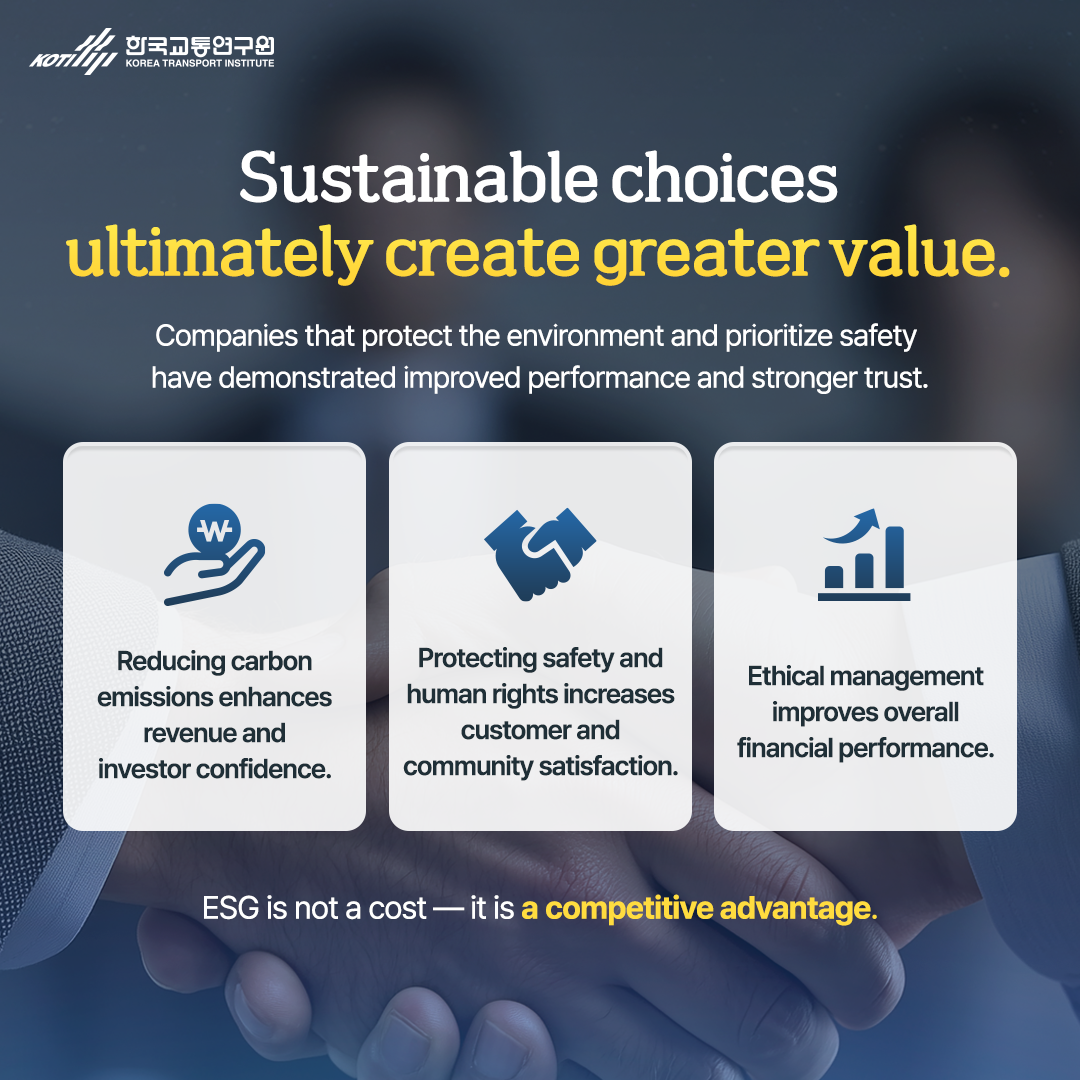
Sustainable choices ultimately create greater value.
Companies that protect the environment and prioritize safety have demonstrated improved performance and stronger trust.- - Reducing carbon emissions enhances revenue and investor confidence.
- - Protecting safety and human rights increases customer and community satisfaction.
- - Ethical management improves overall financial performance.
ESG is not a cost—it is a competitive advantage.
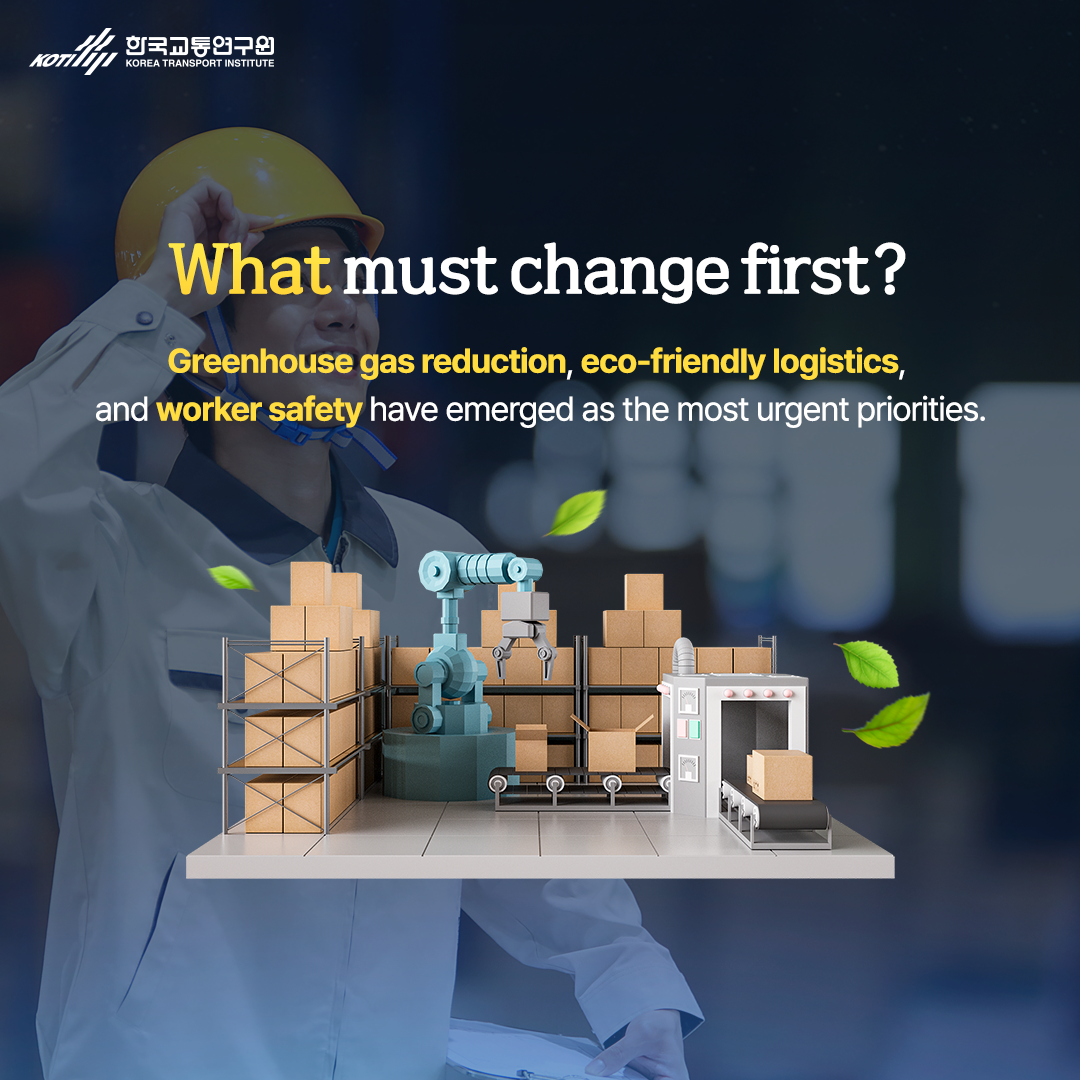
What must change first?
Greenhouse gas reduction, eco-friendly logistics, and worker safety have emerged as the most urgent priorities.
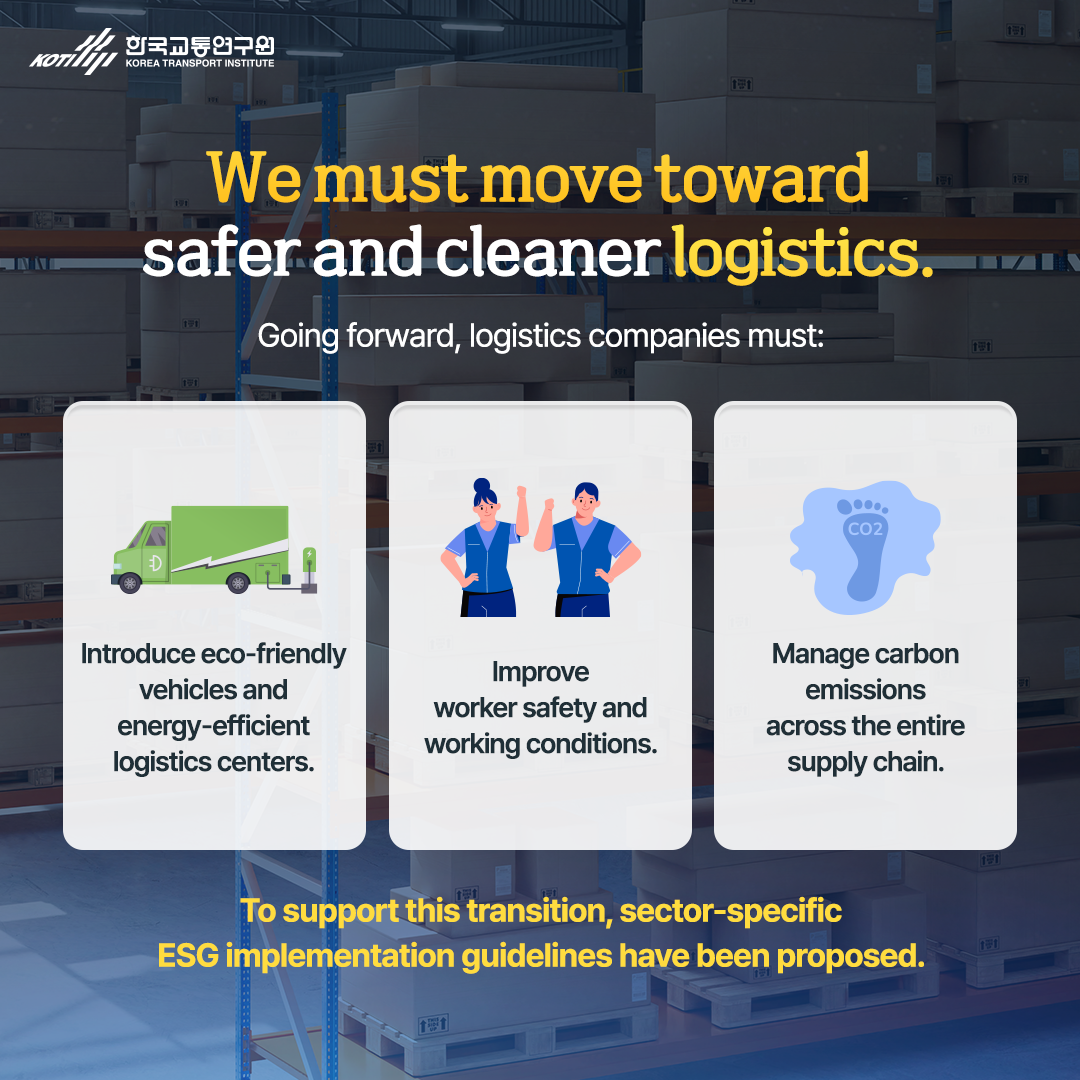
We must move toward safer and cleaner logistics.
Going forward, logistics companies must:
- - Introduce eco-friendly vehicles and energy-efficient logistics centers.
- - Improve worker safety and working conditions.
- - Manage carbon emissions across the entire supply chain.
To support this transition, sector-specific ESG implementation guidelines have been proposed.
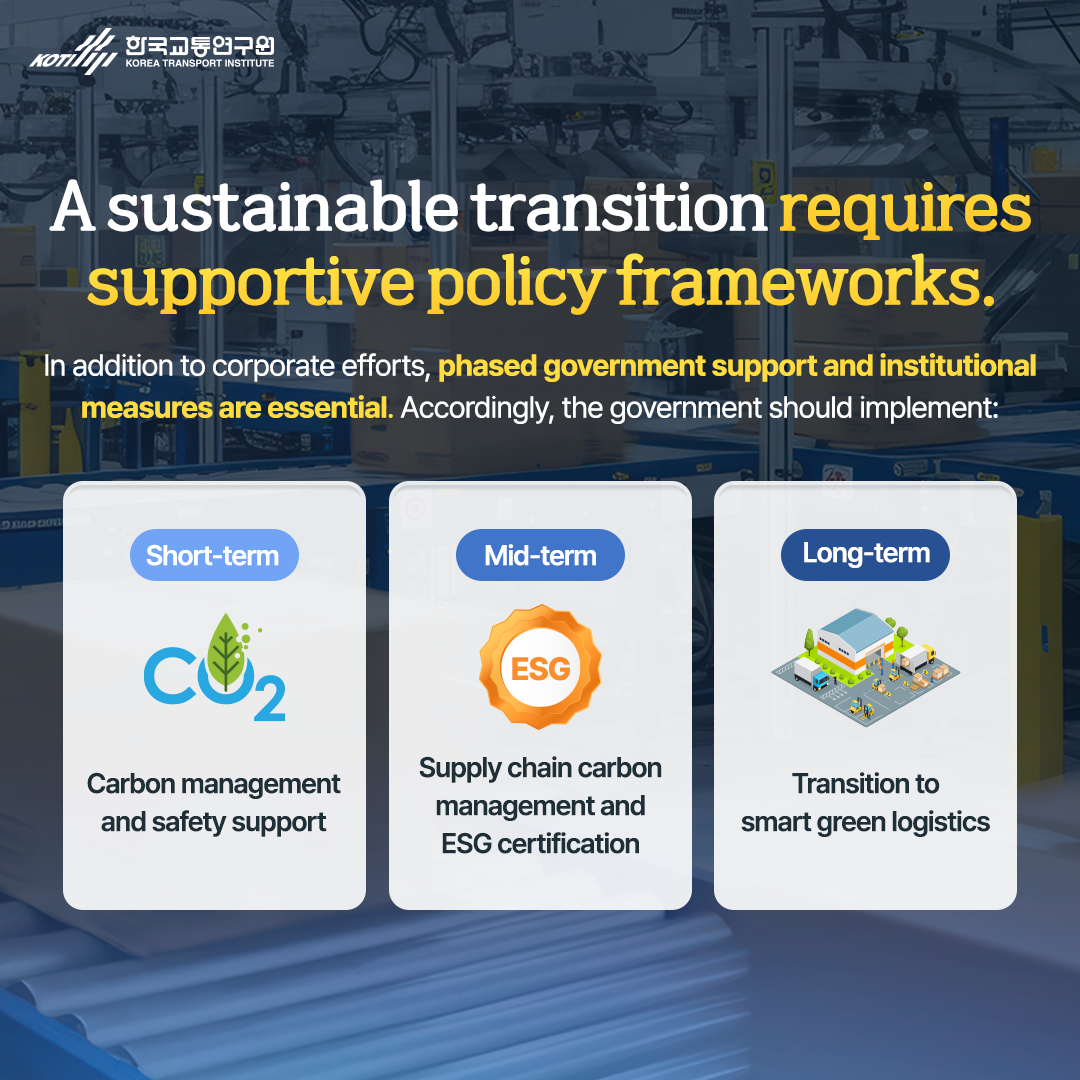
A sustainable transition requires supportive policy frameworks.
In addition to corporate efforts, phased government support and institutional measures are essential.
Accordingly, the government should implement:
- - Short-term: Carbon management and safety support
- - Mid-term: Supply chain carbon management and ESG certification
- - Long-term: Transition to smart green logistics
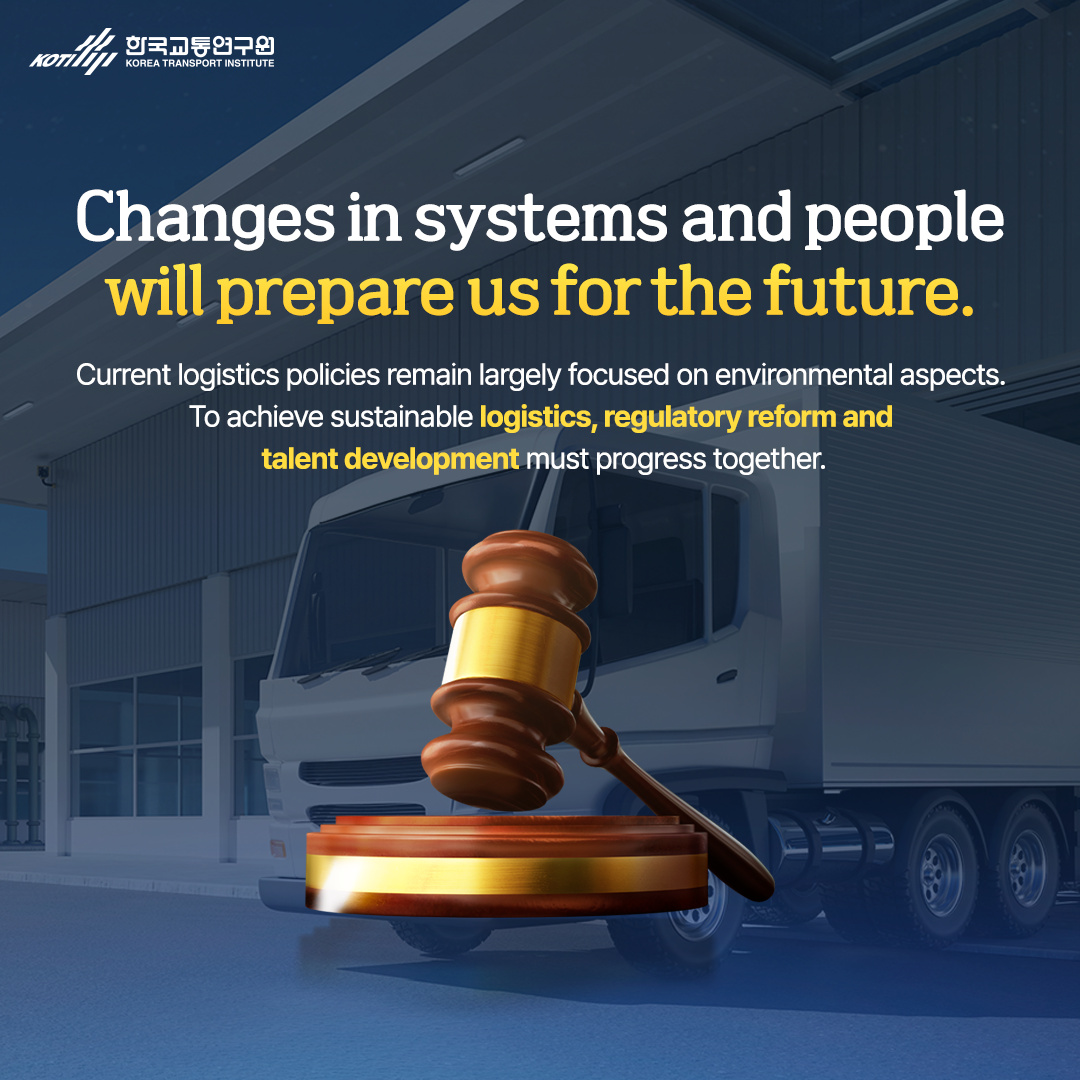
Changes in systems and people will prepare us for the future.
Current logistics policies remain largely focused on environmental aspects.
To achieve sustainable logistics, regulatory reform and talent development must progress together.
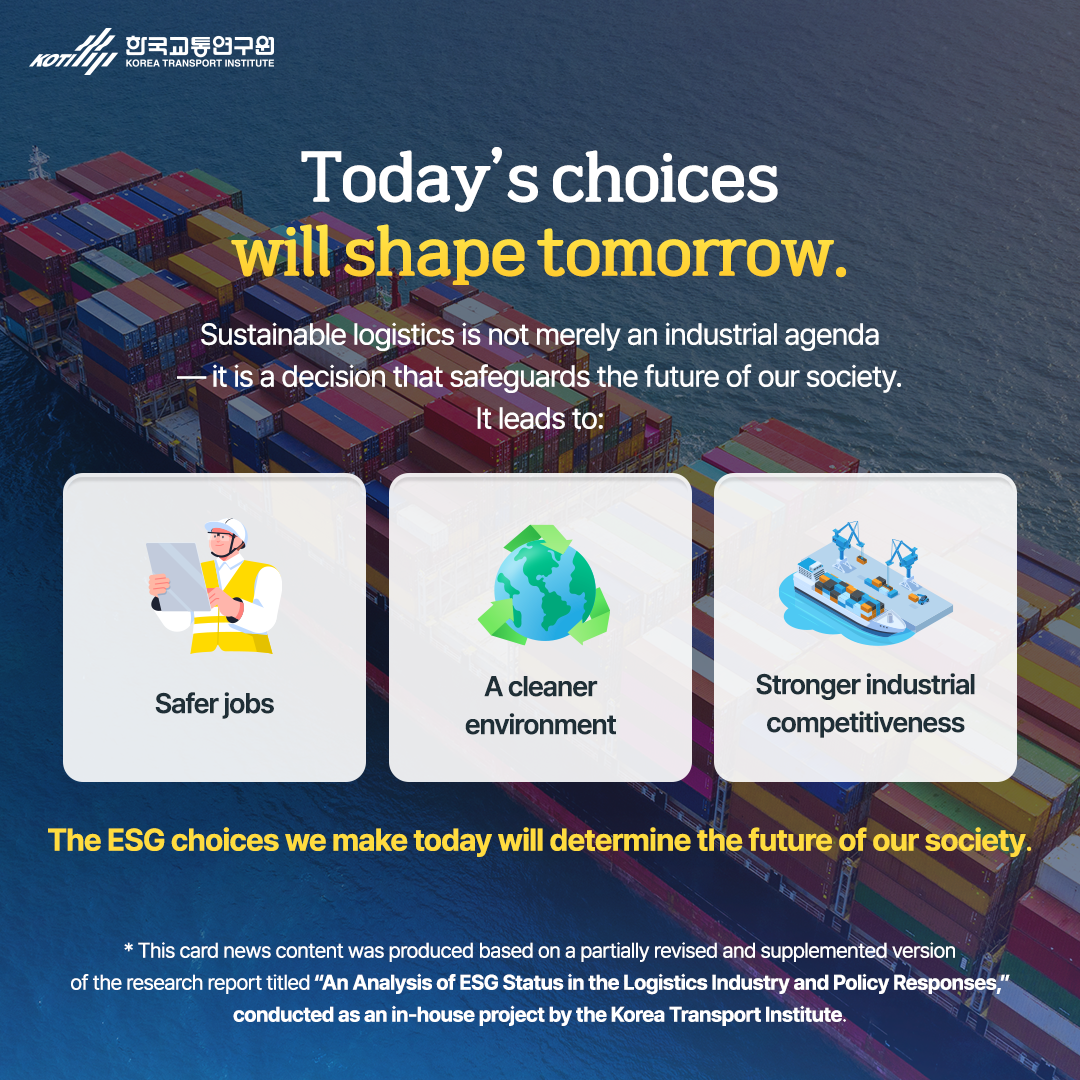
Today’s choices will shape tomorrow.
Sustainable logistics is not merely an industrial agenda—it is a decision that safeguards the future of our society.
It leads to:
- - Safer jobs
- - A cleaner environment
- - Stronger industrial competitiveness
The ESG choices we make today will determine the future of our society.
* This card news content was produced based on a partially revised and supplemented version of the research report titled “An Analysis of ESG Status in the Logistics Industry and Policy Responses,” conducted as an in-house project by the Korea Transport Institute.